

Meet our Hide Week 2026 Featured Guest Instructors!
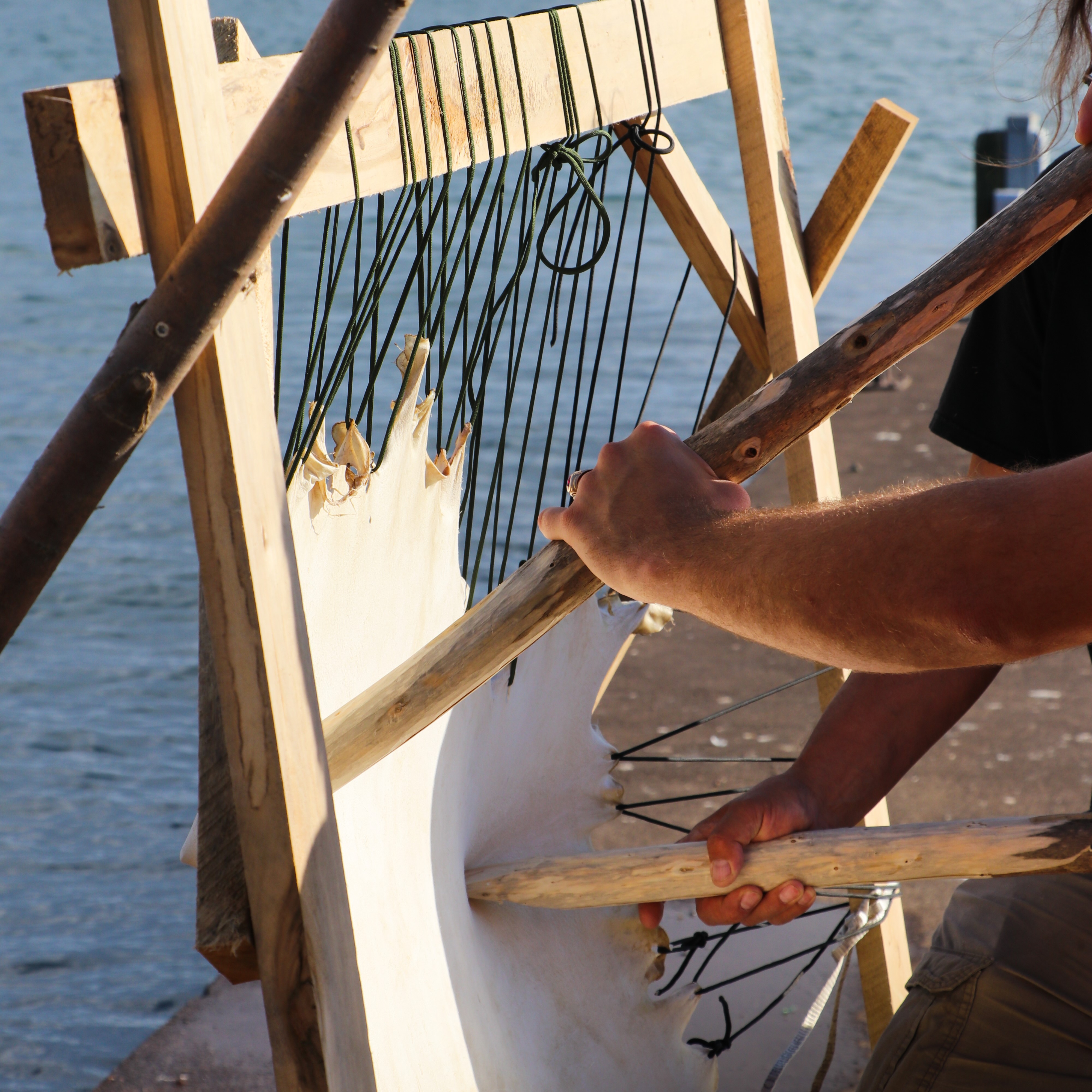
Hide Week returns May 12-18, and North House is excited to welcome an incredibly talented group of guest instructors! Read on to learn more about them and what they're teaching during their stay.
Kevin Lewis and Darla Campbell
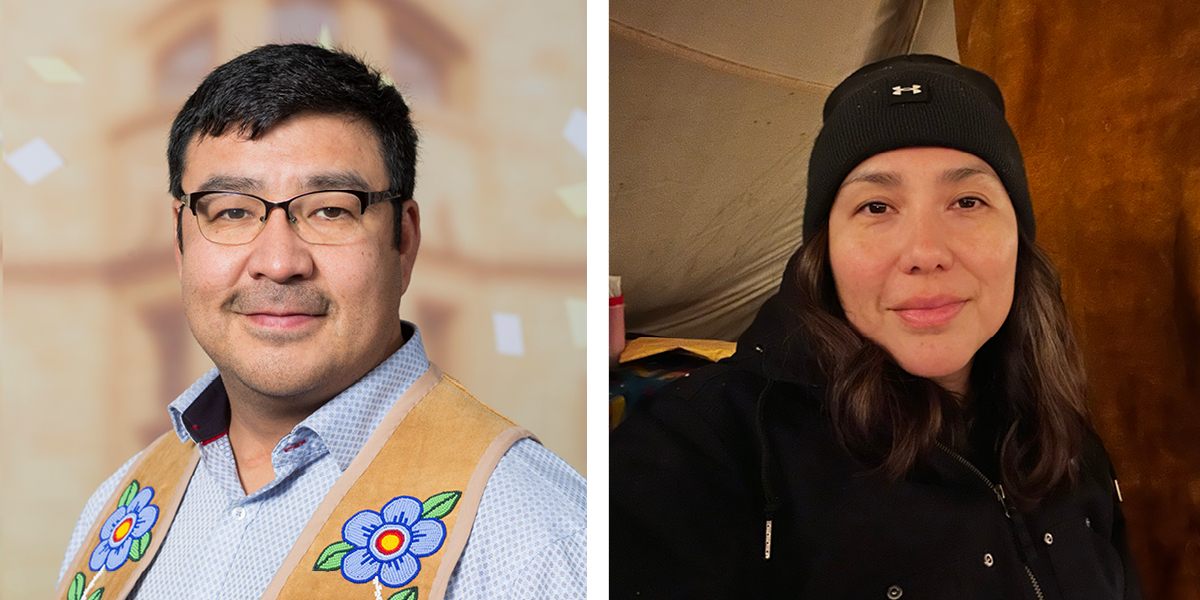
Kevin Lewis and Darla Campbell are a brother and sister pair from Ministikwan Lake Cree Nation (Treaty 6 Territory), Saskatchewan, Canada. Dr. Kevin Lewis is a dedicated advocate for Indigenous land-based education and founded kâniyâsihk Culture Camps, a non-profit organization rooted in Cree philosophy and traditions. As an accomplished educator and Cree language revitalization expert, Kevin integrates cultural teachings, language immersion, and traditional practices into transformative learning experiences.
Darla Campbell is nikâwiy to 3 boys, a licensed practical nurse for over 12 years, and has developed her love of hide tanning throughout the years. She facilitates with kâniyâsik Culture Camps, which leads two Hide Camps each year. Together, Lewis and Campbell will teach a Hide Week course called pahkêkinokêwin: Moose Hide Tanning.
“Moose is supposed to bring people together. The hunt is meant to be done with people,” Lewis said. “It’s a huge animal, very heavy, and skilled hunters bring people together. They share meat, they share the work and unite families. This will create friendships because it takes a lot of people to work through a hunt, butchering, hide tanning, and making projects.”
Cooperation is something students can expect from their class at North House. Over the course of three days, Lewis and Campbell will guide participants through several hides at different stages of the process—including dry scraping, braining, softening, and smoking—offering a hands-on introduction to each step, and an opportunity to engage in a traditional practice deeply rooted in the North. When asked what students can expect from the course, they said, “Lots of hard work and teamwork.”
Karl Karlsson
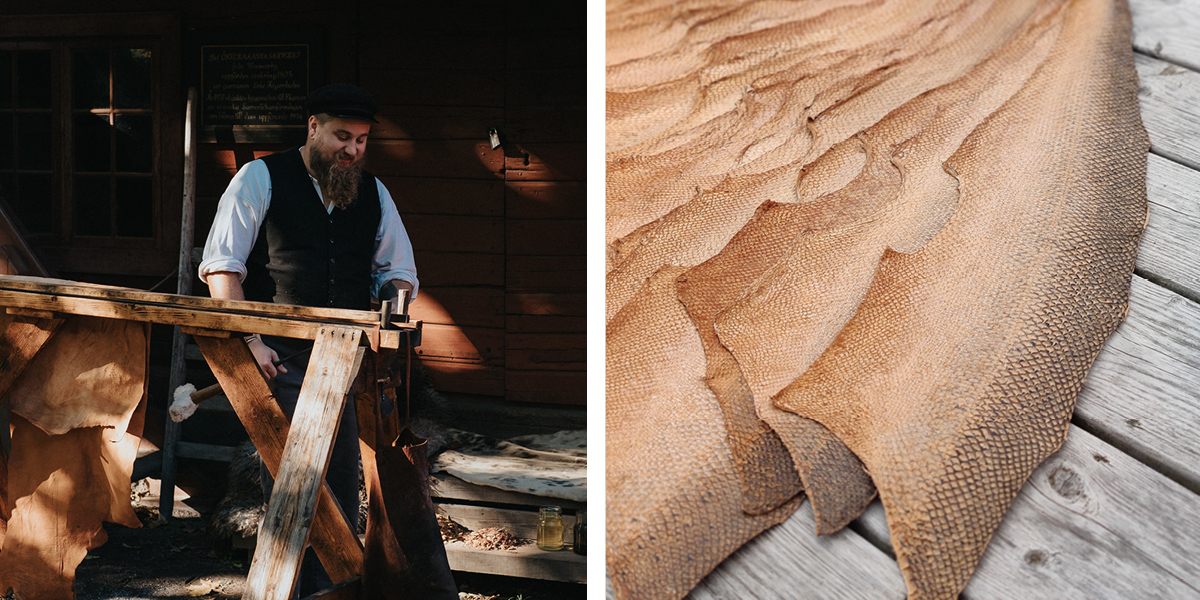
Another international instructor joining us for Hide Week is Karl Karlsson of Stockholm, Sweden. Karlsson started tanning in 2016 and is the third person to have earned the title of Master Tanner through the rigorous three-year training program. His journey as a tanner started while studying organic farming at a folk school in Sweden, where he experimented with tanning on his own and fell in love with the craft.
Since 2020, Karlsson has run a small-scale tannery in Stockholm’s archipelago and works at Europe’s largest open air museum, demonstrating and informing visitors about this amazing craft. Although Karlsson said that interest in traditional tanning is quite low in Sweden, a big part of his work involves engaging the public through tanning demonstrations.
“People seem really fascinated by the subject,” he said.
While at North House, Karlsson will teach Fish Skin Tanning—which he says is a great introduction to tanning—as well as Traditional Scaninavian Tanning Methods, which explores bark tanning methods dating back to the early Middle Ages.
“We will look into the use of pre tanning methods and take on tanning of a beaver tail. A gorgeous purse found in Ångermanland, Sweden, dated 800-1100 A.D., is believed to be made out of one side of a beaver tail,” Karlsson said. “I’m looking forward to being part of this week, sharing knowledge and always wanting to learn more myself!”
Matt Richards
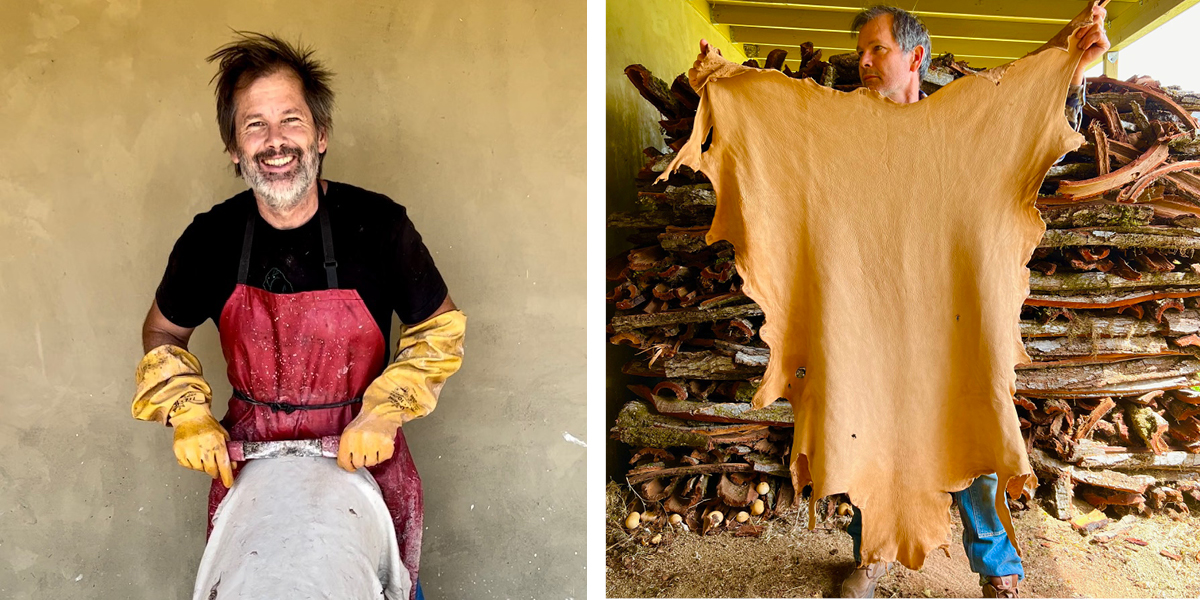
Matt Richards, of Ashland, Oregon, has been tanning and teaching natural hide tanning since 1989. He’s the author of Deerskins into Buckskins and runs a tannery in Oregon. Much of his work has been inspired by making useful, beautiful material from hides that too often go to waste.
“This is a core reason why I’m into tanning,” Richards said. “Most hides these days end up at the landfill, especially deer, goats, sheep, cattle, and even bison. There are exotics such as mink, that are specifically raised for their hides, factory farmed in cages, and of course there are people who trophy hunt, where the hide and its display are a big part of their motivation. We don’t want any part of that, but the hides that otherwise go to waste? I’d argue that tanning those and making good use of them is the most sustainable of all fabrics.”
While here, Richards will teach three tanning courses, including Practical and Magical Chemistry of Natural Leather Tanning, a course that explores the science behind different tanning methods.
“It will be a combination of theory and hands-on, mad scientist play, with the ultimate goal of participants getting to really understand how skins and different tanning methods work, why they work, and how to use that knowledge.”
Hide Week 2026 courses are open for registration, and all event details are available here.