
Recreating the Egtved Bog Shirt
Craft is a way to connect to traditions that have been passed on for generations. In this blog post, Josie Cooke writes about recreating a historic garment known as the “bog shirt.”
At the beginning of the Artisan Development Program, I set some intentions for the year.
These intentions are:
- Working with locally sourced materials
- Weaving yardage for historically inspired garments
- Making home textiles like towels and rugs
I am currently creating a historical garment known as the “bog shirt.” This garment was found in Jutland, Denmark, in the 1920s, and dates back to the Bronze Age, around 1370 BCE. This shirt was part of an outfit worn by the “Egtved girl” and was remarkably well preserved. It is rare to find preserved textiles as they naturally decompose in soil. Only in specific conditions like an oxygen-deprived bog or areas containing high levels of salt do we find well-preserved clothing.
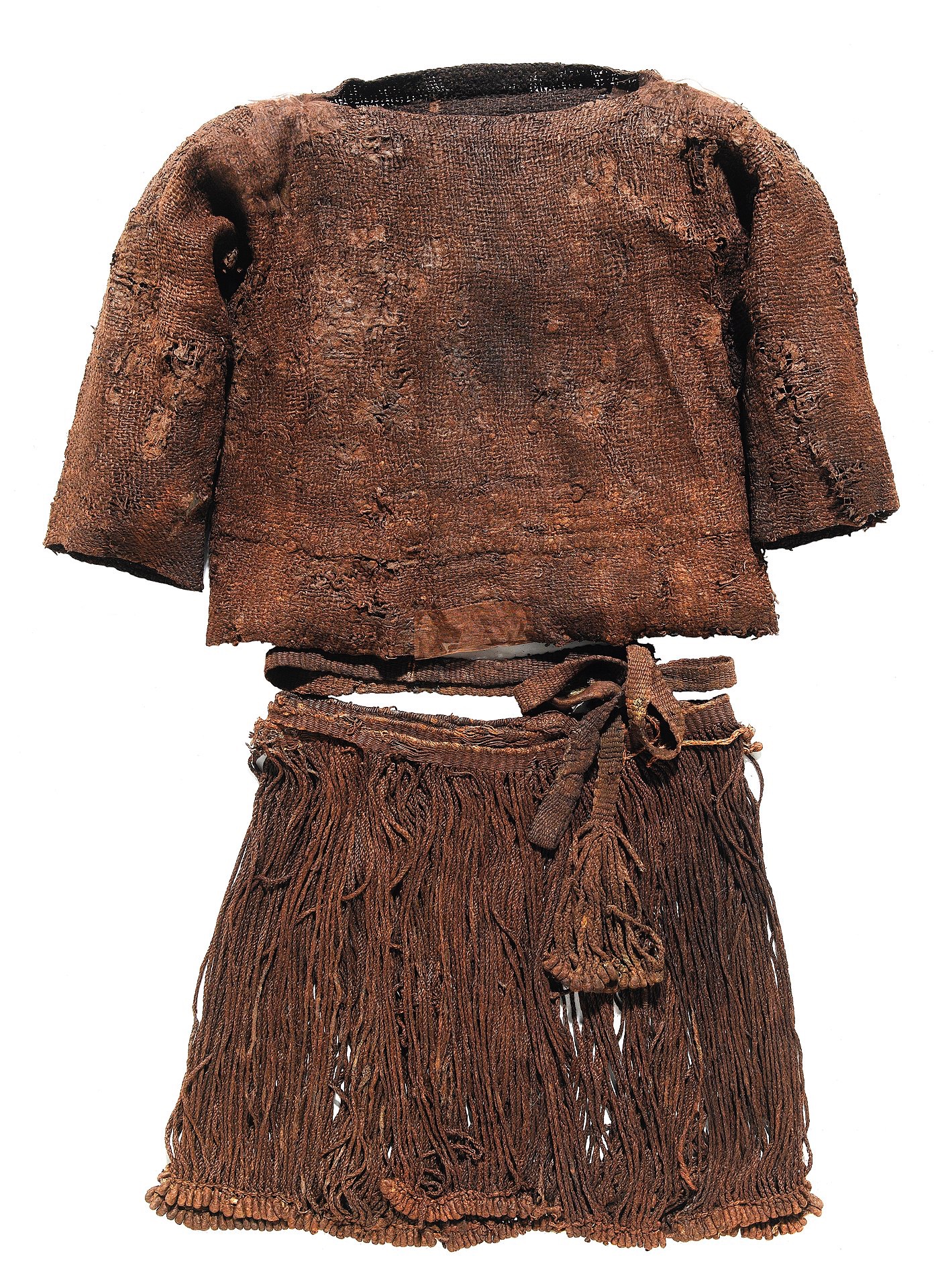
Egtved Girl’s Outfit, National Museum of Denmark
The Egtved Girl was wearing a woven shirt similar to other garments found in nearby archeological sites: the Borum Eshøj and the Skrydstrup Woman. The design of the Egtved shirt is simple but clever. It is woven as a rectangle, requires only a few folds and minor seams, and wastes no material.
Various historians and enthusiasts have replicated this pattern. Each replication deviates to various degrees from the original piece. Of the sources of reference material I found, I based my design on Nicole DeRushie’s Bog Fashion and Virginia West’s Weavers Wearables. In West’s book, she suggests creating neck and arm holes using two boat shuttles, foregoing the need to sew the cut edges. This is a deviation from the original, which had a cut neck hole. I am mostly interested in the style of this garment and not bound by stalwart accuracy in this rendition, so I will opt for this method. It is a good challenge for a weaver to create an opening while weaving an otherwise solid piece of cloth.
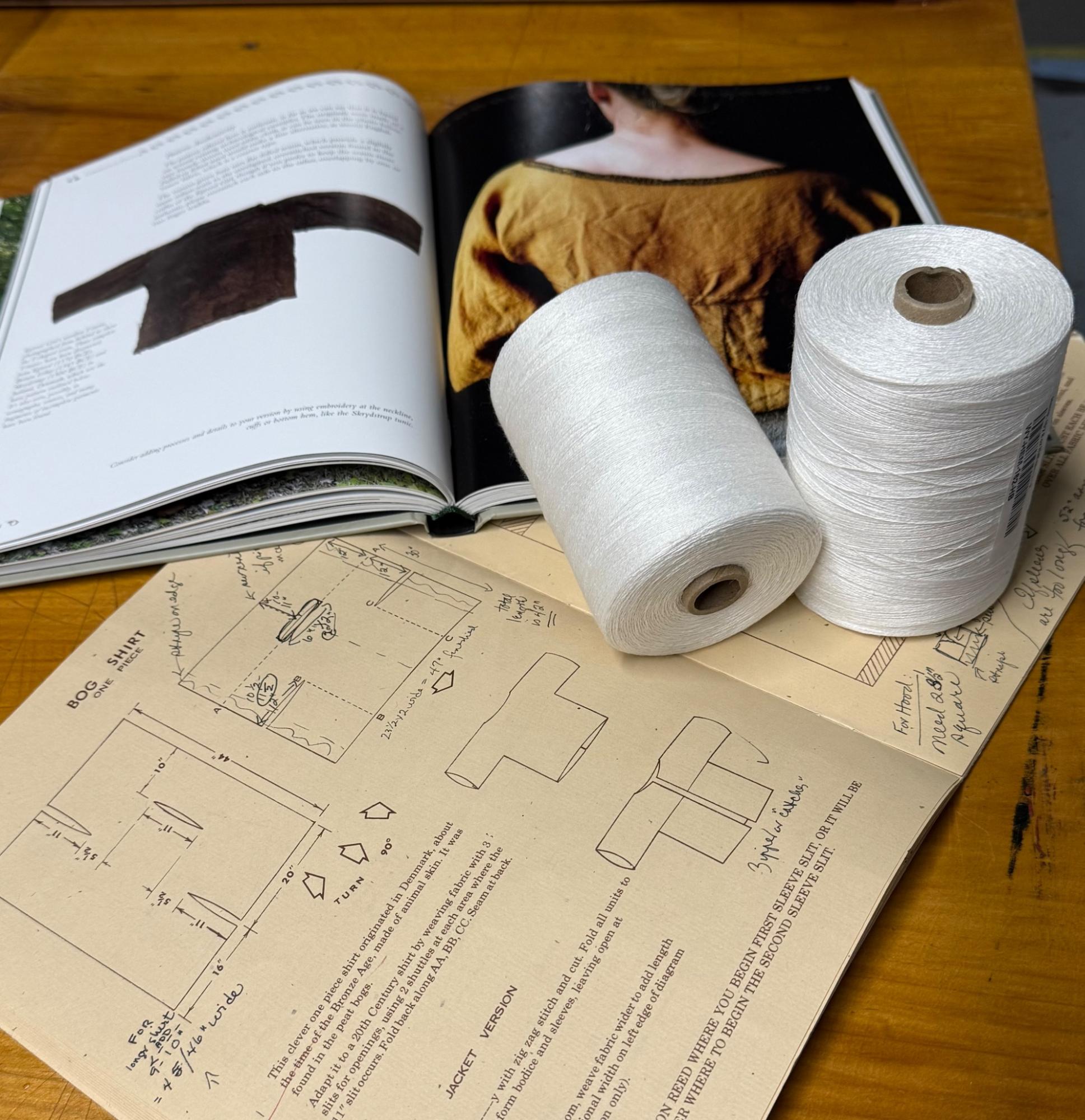
In the background, Nicole DeRushie’s book Bog Fashion. In the foreground, Virginia West’s Weavers Wearables
Another deviation I am making from the original bog shirt is to weave with hemp instead of wool. I have not woven hemp before and want to try it, so I am incorporating it into this project. My expectation is a lightweight shirt that is acceptable for everyday wear. I also hope it serves as a conversation piece during weaving demonstrations.
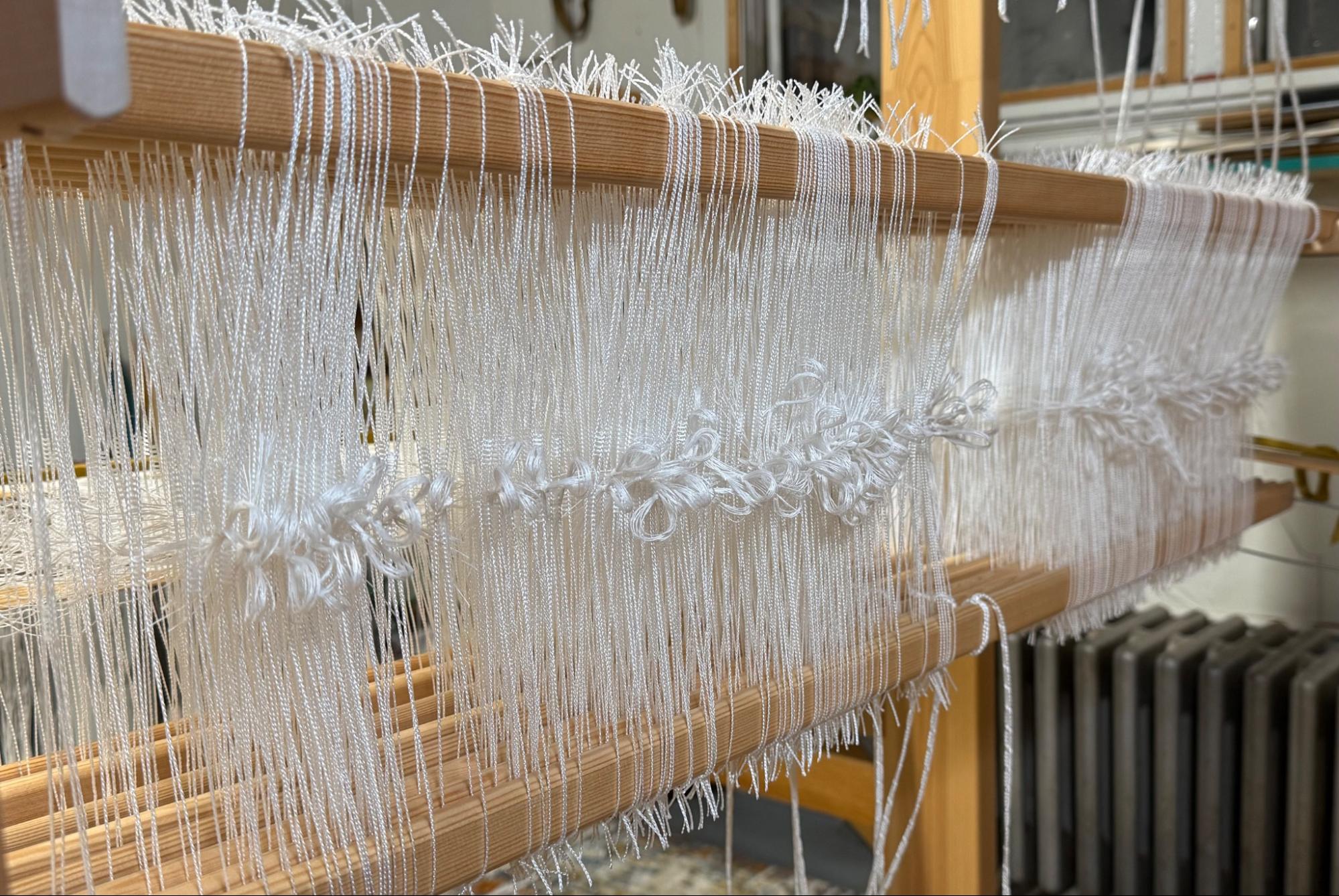
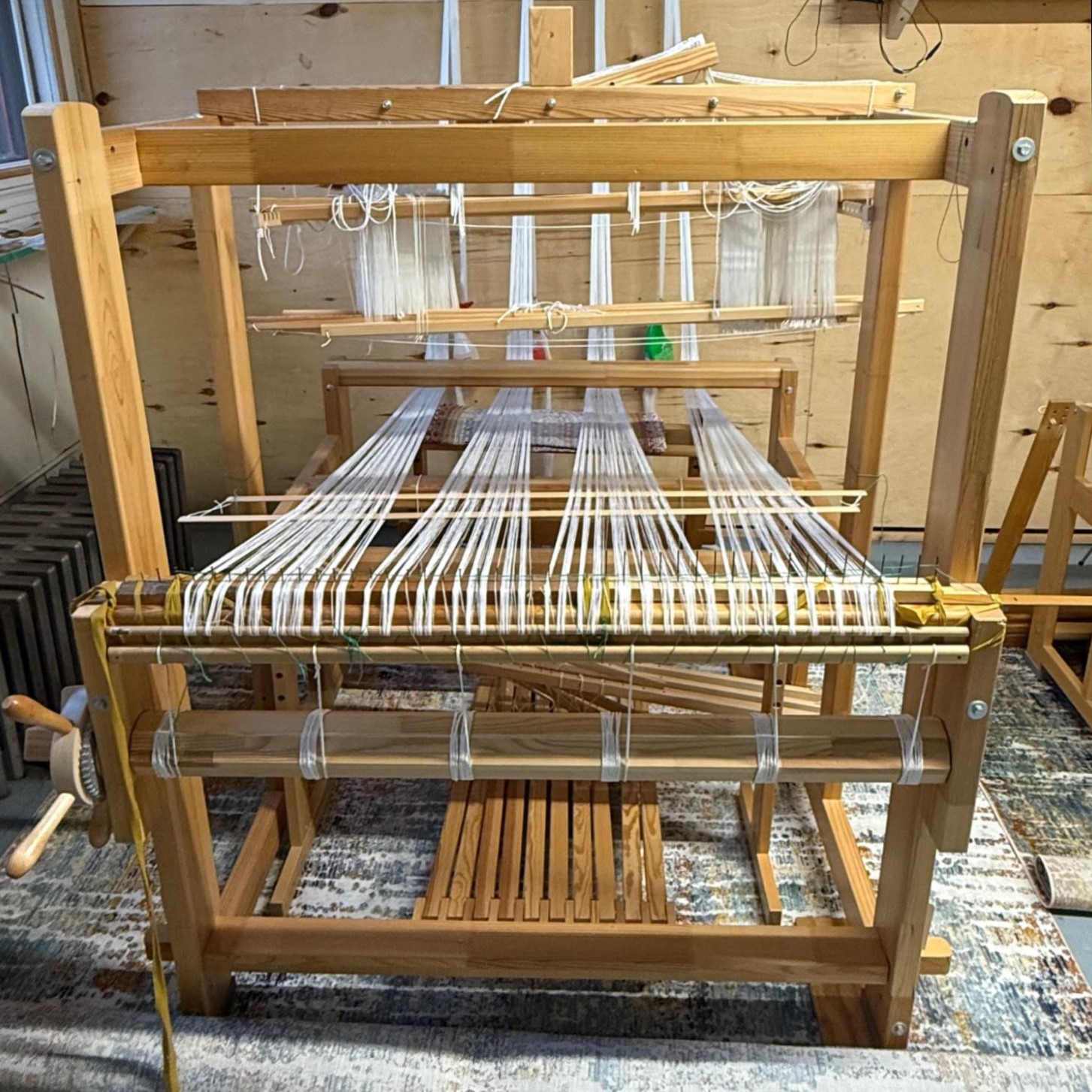
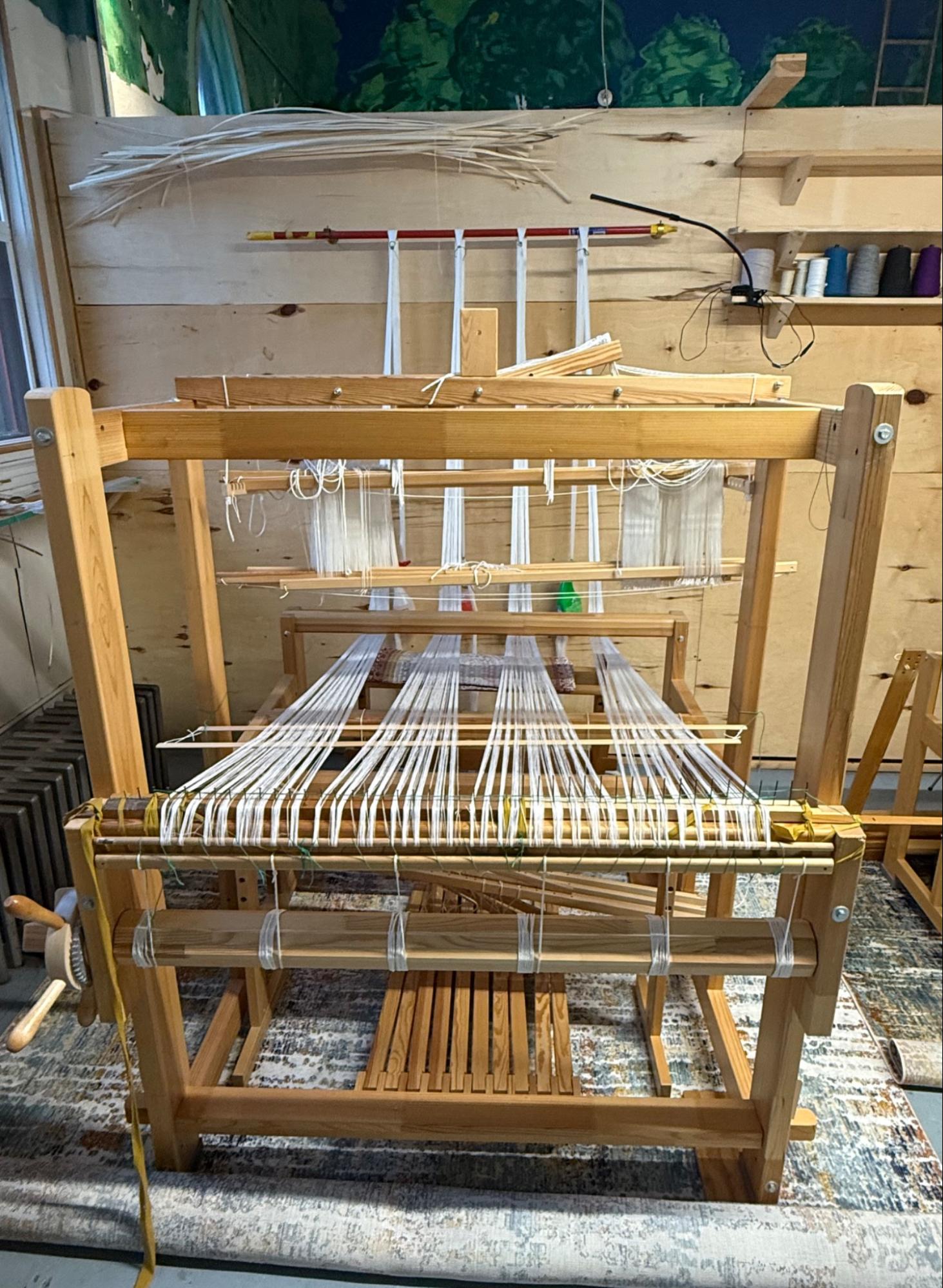
Because the hemp is quite fine (16/2) I will weave it at 30 threads per inch. The fabric will be 40 inches wide, so I have prepared the loom with 1200 threads (30 x 40). If you are interested in seeing some videos of the beaming and threading process, please visit my Instagram @josie_cooke. You may notice that the amount going onto the loom is longer than one shirt. Because preparing the loom is quite time-consuming, I have put on enough material for approximately three shirts. One will be the Egtved shirt, and the two others of a style yet to be determined.
Beaming the loom
Why do all this, you may wonder. Sometimes I wonder too. But then I think back to a time when humans first realized they could take fiber from plants and animals, spin it to give it strength, and ply it to make it balanced, weave it to make cloth, wear it, decorate it, trade it, and improve on it. On and on and on through time, passing bits of wisdom down through the generations all the way to where we are now. In this way, humans are like the monarch butterfly: traveling vast distances, across generations, passing on knowledge like a torch carried from one life to the next. We have come this far because of ancestors, and theirs before them. Their struggle, their successes have become our success. This project is an acknowledgement of that. And also a reminder. We’ve traveled away from a place where we make our own clothes from natural materials. This is one way to circle back, to retrieve and revive the practice of creating cloth.