

Meet Mathilde Frances Lind
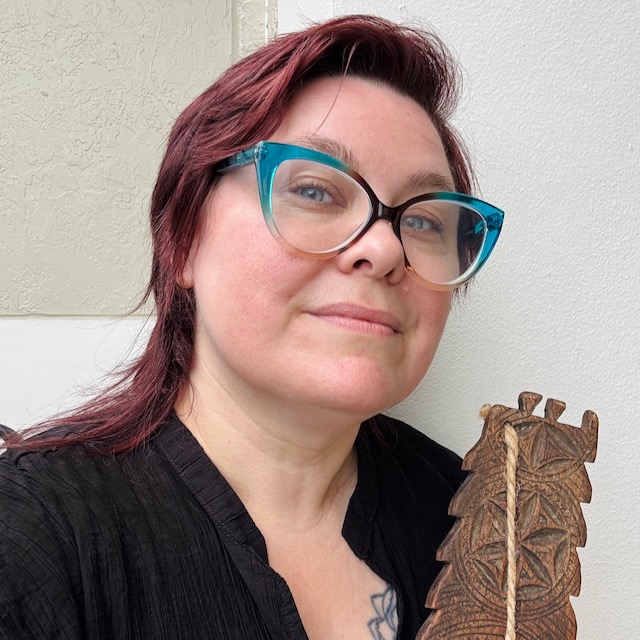
Meet Mathilde Frances Lind: a folklorist, textile artist, and member of the Artisan Development Program! In this blog post, Mathilde writes about their travels, research, and their goal of recreating historic Eastern European fabrics.
Tere! I am Mathilde Frances Lind, a textile maker and spinning wheel restorer in the Artisan Development Program at North House. I’d like to tell you a bit about my craft practice, how it intersects with my work as a researcher, and my international connections.
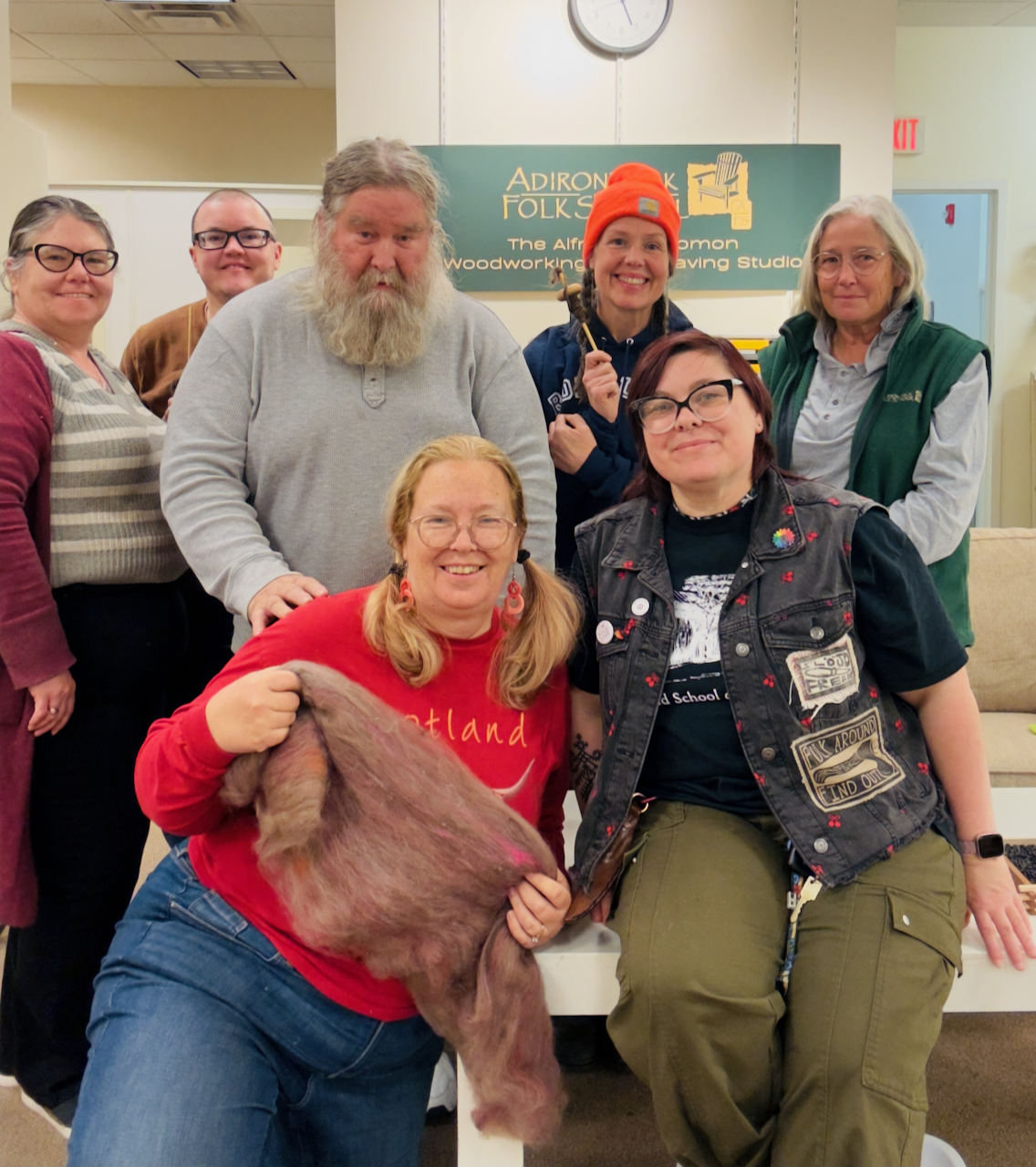
Mathilde Lind (bottom right) with their November 2025 Fleece to Yarn class at the Adirondack Folk School in Lake Luzerne, New York.
“Where are you from?” is usually a safe conversation starter, but it’s a complicated question for me! My family is from New England, but I did not live there (or anywhere) for long enough to put down roots. Dad was in IT, and we moved around a lot to stay ahead of the latest changes (usually layoffs) in his industry. Once I could strike out on my own, I went to the Pacific Northwest, first living in Portland, Oregon and joining a workers’ collective at a community-owned food cooperative. Then I moved to the Cascade Mountains, worked as a milker on a goat farm, and put myself through school to become a folklorist.
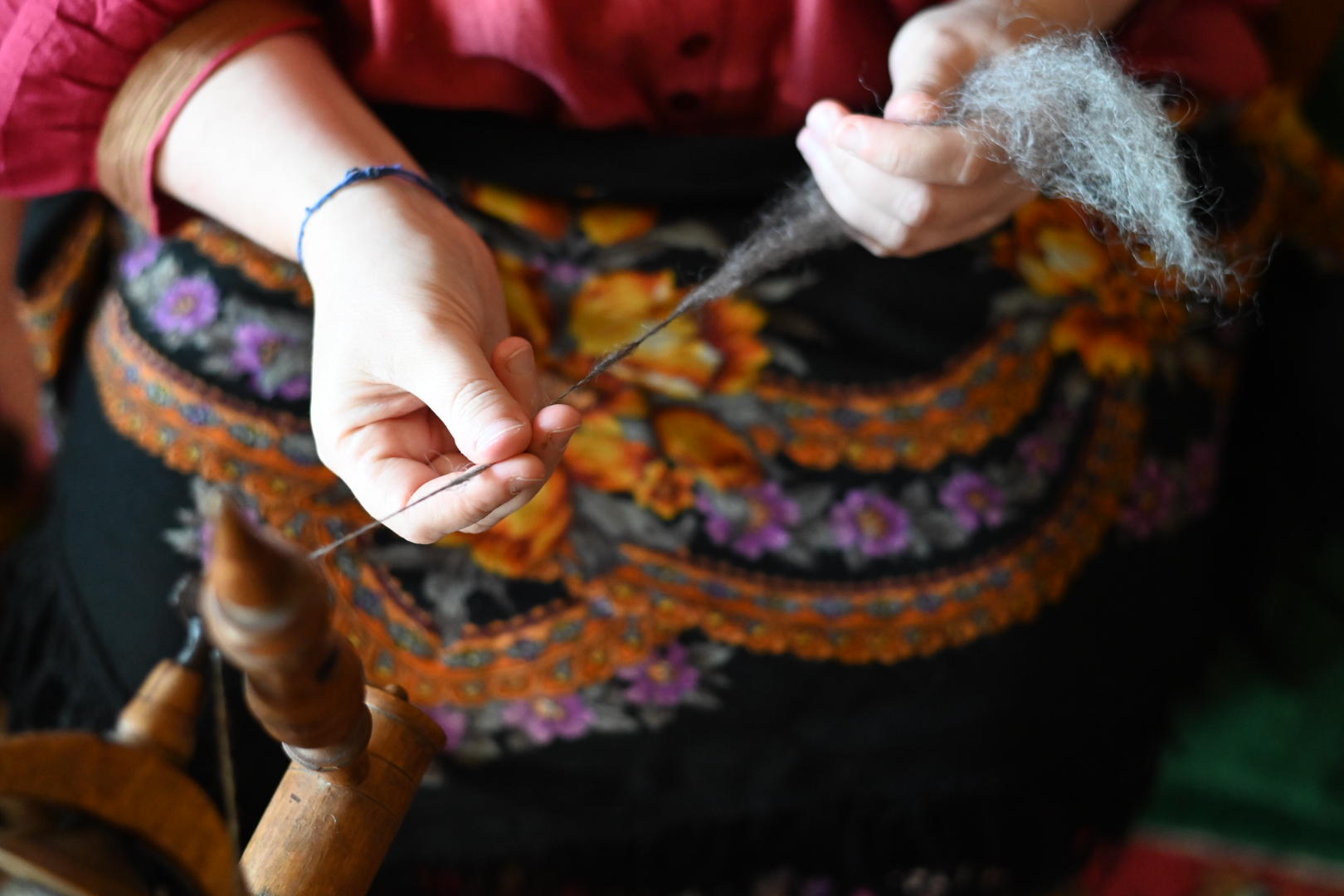
Spinning Kihnu native sheep wool on an Estonian spinning wheel.
I am still a researcher as well as an artisan, but craft came first and remains at the heart of everything I do. As far back as you care to look, my family have been textile workers. I was first exposed to sewing, embroidery, and quilting by my mom, who made all my clothes until I was well into elementary school. Later, after I moved to Oregon, I was exposed to spinning, which is still my favorite and strongest craft. There, I was a member of the Aurora Colony Handspinners’ Guild, which focuses on using, restoring, and educating the public about antique spinning wheels. The guild hosts events with the Old Aurora Colony Museum, which safeguards the legacy of the Aurora Colony, a nineteenth-century Christian utopian society.
After a few years of spinning and being immersed in Pacific Northwest wool culture, I started to teach craft classes at the food co-op. I realized that I loved being an educator, and I wanted to spend my life going as deep on this craft as I could possibly go. I decided that the best path to give me the time and space to do that was to go back to school to study material culture. I enrolled in the folklore program at the University of Oregon, then I got an MA and PhD in folklore from Indiana University Bloomington.
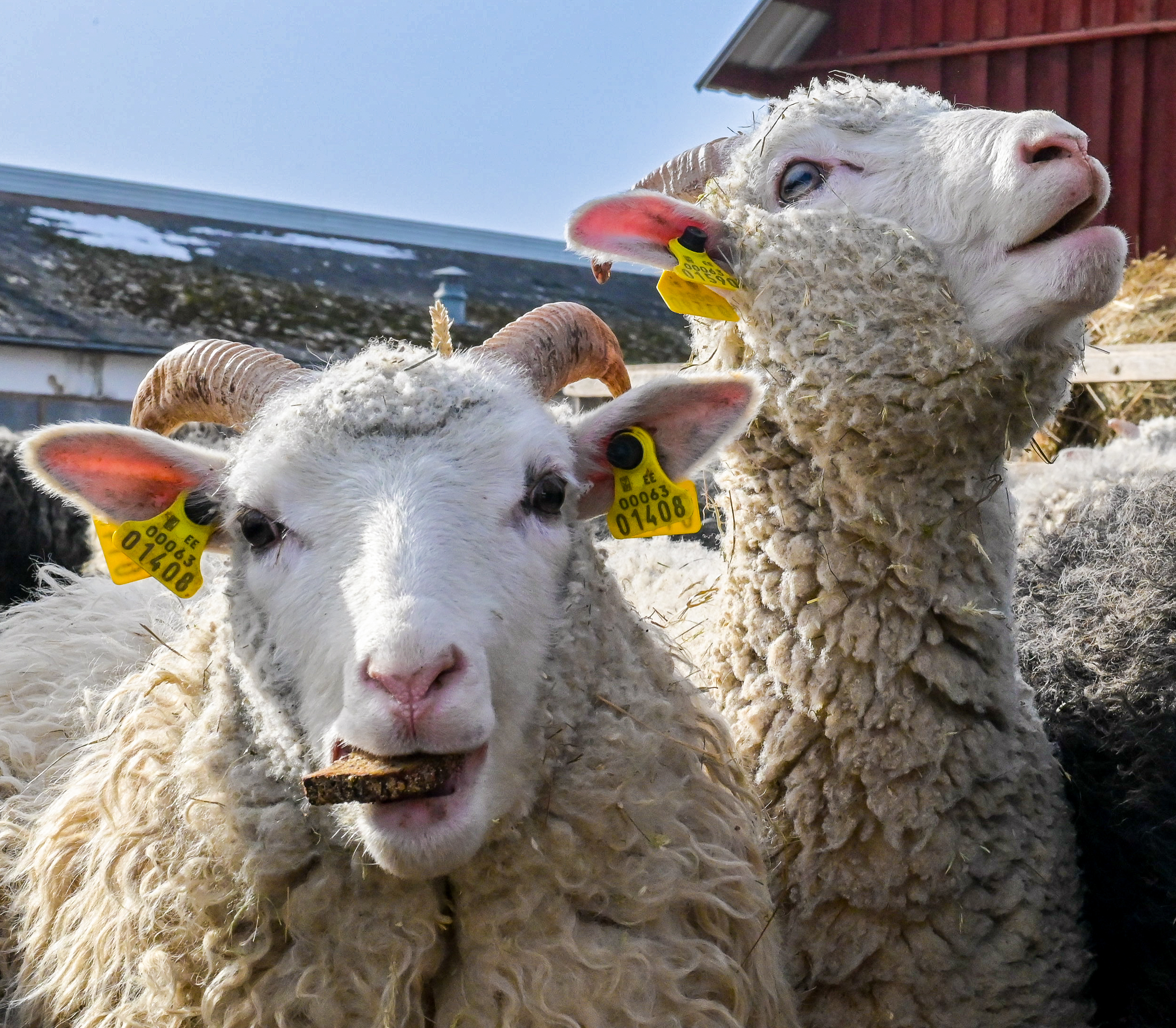
Some Estonian colleagues in the field: Kihnu native sheep enjoying rye husks at Hallivilla farm.
While I was at IU, I was awarded a grant from the Craft Research Fund to do two months of work study at the Marshfield School of Weaving in Marshfield, Vermont. Learning from Kate Smith and Norman Kennedy, who represent a continuous line of weaving tradition from Scotland, motivated me to find a deeply rooted textile craft tradition that I could carry with me in my research and teaching. This is how I ended up in Estonia, a small Baltic country in northeastern Europe with vibrant folk dress traditions and a robust craft education scene. I spent nearly four years living there: taking craft classes, doing fieldwork, working in a small wool mill, writing my dissertation, and honing my personal practice in weaving, spinning, and knitting. I wrote my dissertation about the connections between traditional wool crafts and folk ecologies, weaving together craft practice with what I learned from the shepherds who maintain biodiverse coastal meadows and forest pastures through conservation grazing with native sheep.
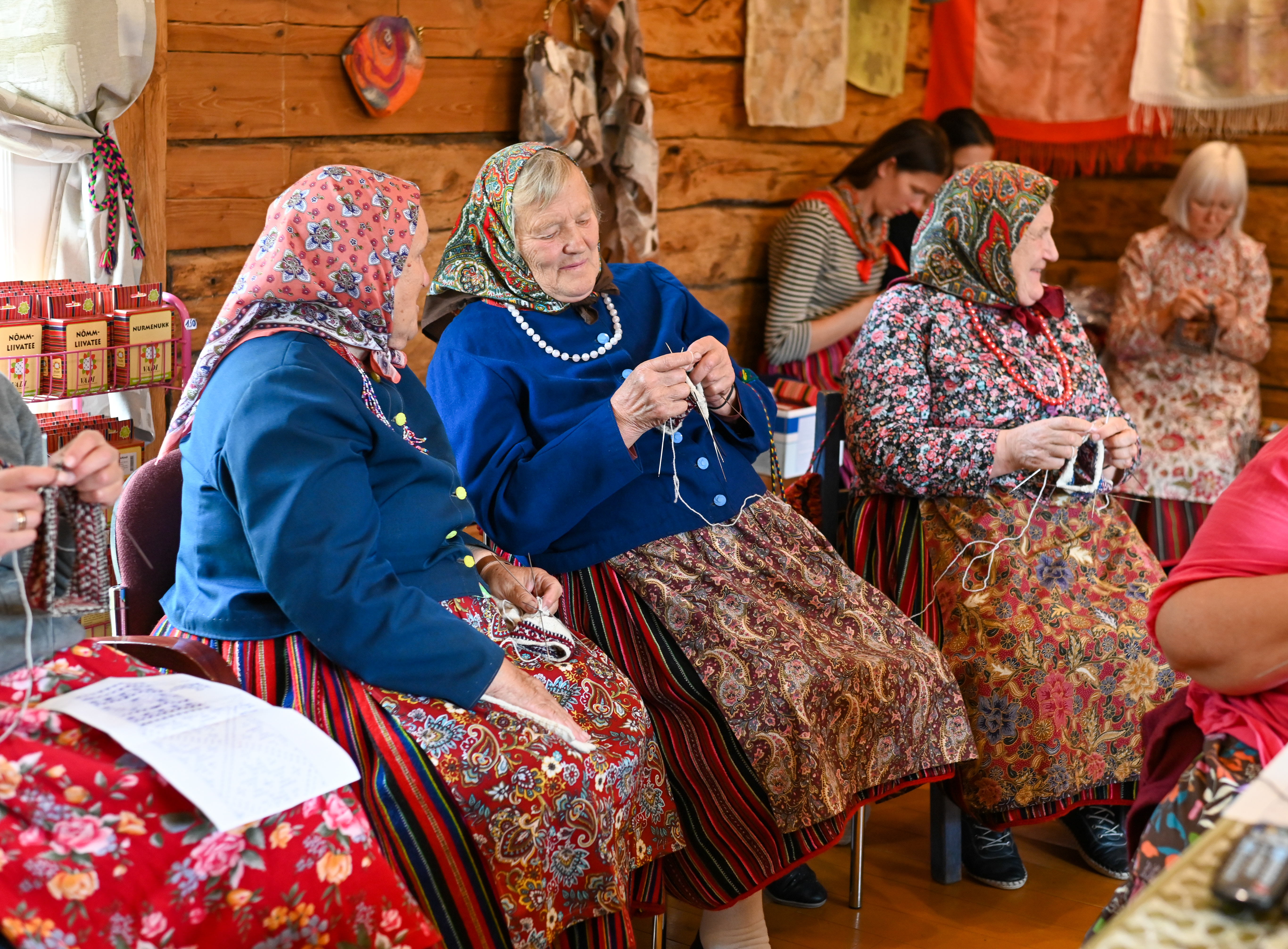
Elder master knitters of Kihnu Island at the Kihnu Knitting Festival. Photo by author.
After returning to the States in 2022 and defending my dissertation in 2023, I have been working on finding a healthy balance between my two sides: the folklorist and the artisan. Of course, each informs the other, but both demand quite a lot of time and attention! Coming to North House is a move towards centering craft practice in my life.
2025 has been a year of transformation for me, with all the joy and difficulty that implies. I have been travelling back and forth between Estonia, Finland, and the States, and my research interests have broadened to Ukrainian textiles. As a maker, though, I have been mostly sticking with my Estonian influences. A large portion of my work is inspired by Kihnu Island, the only place in Estonia where people wear folk dress every day. Although the most iconic part of their folk dress, the kört, or striped skirt, is off limits to outsiders unless given specific permission, kihnlased (Kihnu islanders) welcome others to knit, embroider, and weave their traditional items. I have spent many hours knitting with the island’s elders and mainland guests, and I aspire to their precision and attention to detail. Aesthetically, Kihnu and nearby Tõstamaa are by far my favorite folk textile centers in Estonia, so they have the strongest influences on my own practice.

Kihnu mitten colorwork design based on historical patterns. Photo and design by author, 2025.
While I am at North House, I am working on improving my weaving. It has been an important secondary craft for me, and I want to be as strong a weaver as I am a spinner. My goal is to reproduce historical fabric structures from Eastern Europe for folk dress. In addition to weaving yardage, this means making elaborate woven belts and accessories such as the sõba, a voluminous woolen wrap that is often embellished with tablet weaving, bronze wire spirals, tassels, bells, and embroidery. Thus, traditional Estonian weaving often requires a very broad range of skills and materials to accomplish a single project. I also make some of my own tools and restore old spinning wheels, so my textile crafts incorporate a certain amount of woodworking as well.
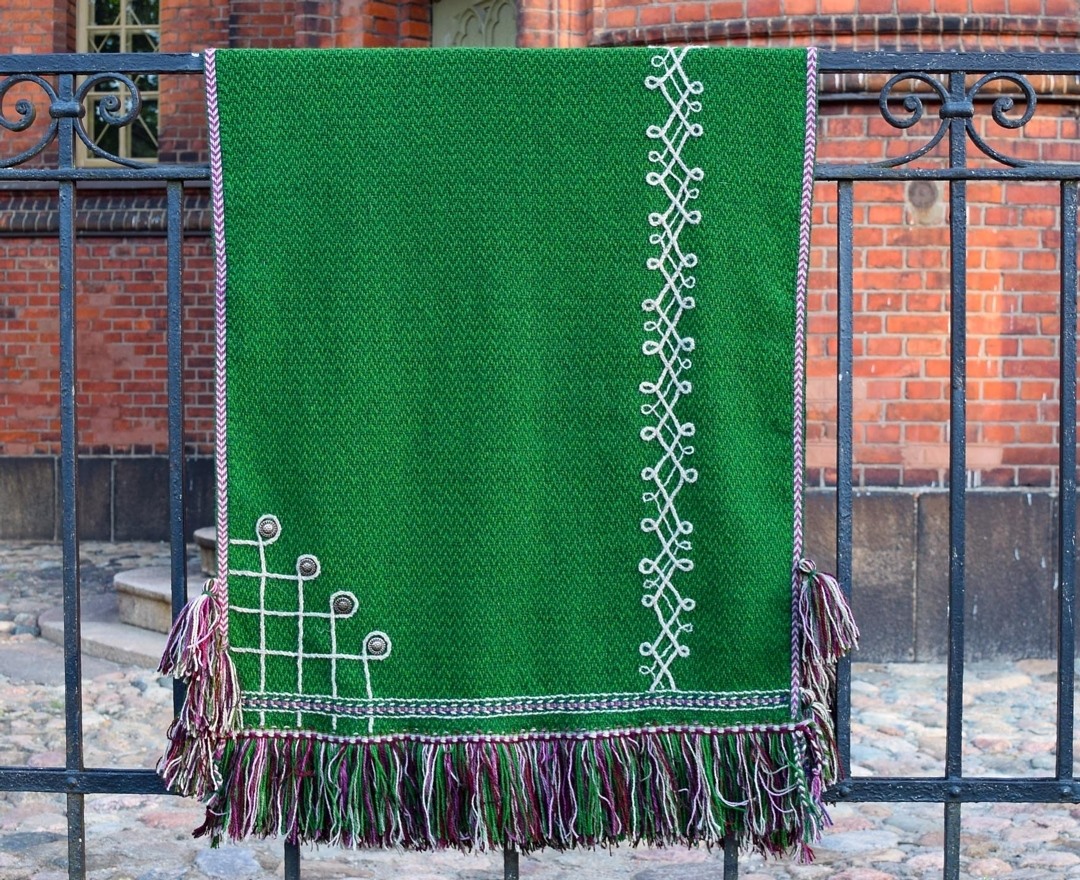
Sõba with tablet weaving, supplemental fringe, tassels, metal embellishments, and couched handmade cordage. Made and photographed by author.
I am so grateful for the support that ADP provides for establishing myself as a working artisan. Currently, I am developing more course materials and formulating a craft business partnership under the name Marena. More big changes are on the horizon, and I am excited to see what the next year brings.
Thank you for welcoming this weary voyager!