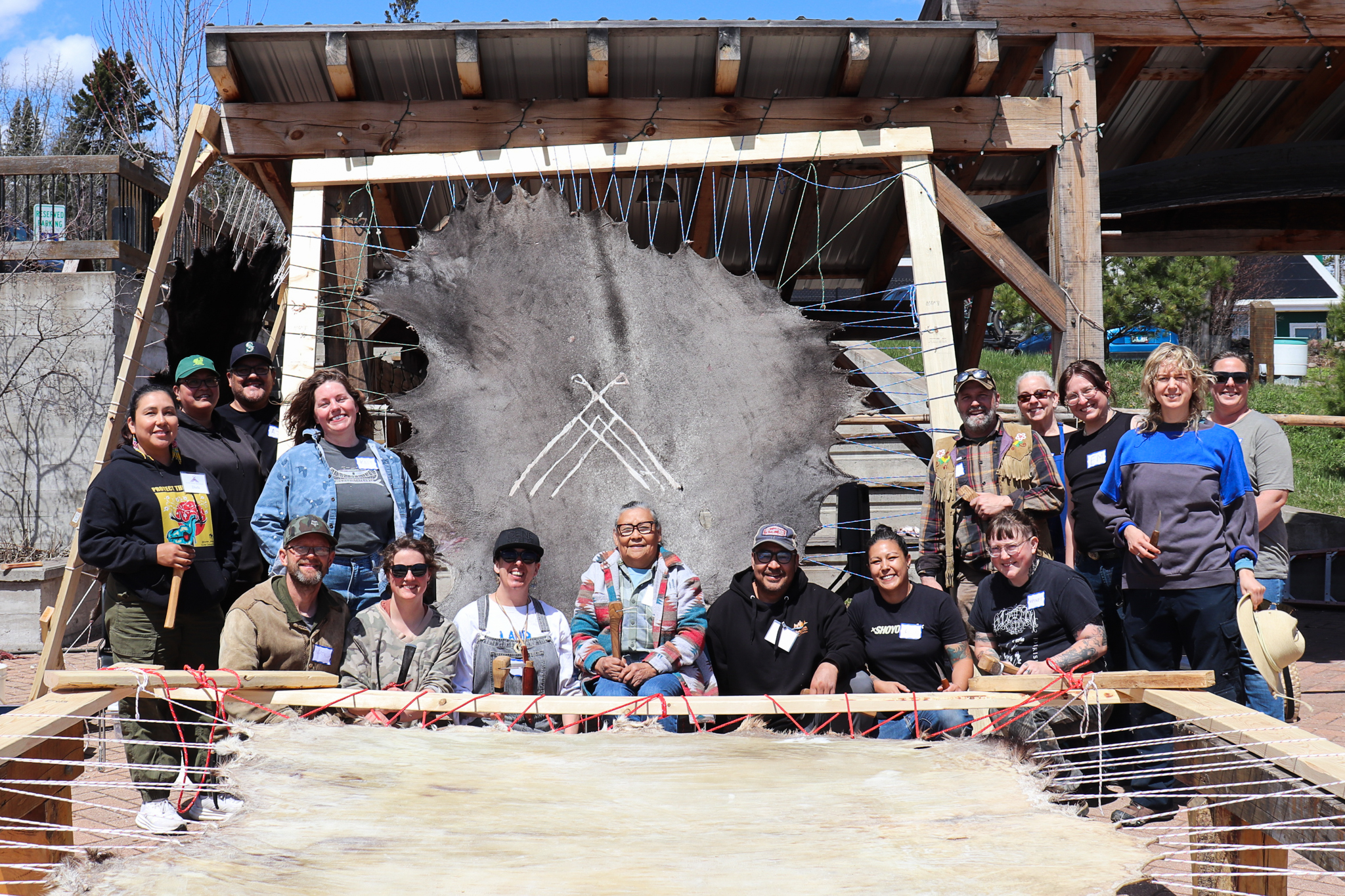

Hide Tanning: Why Do It? A Weeklong Exploration at North House Folk School
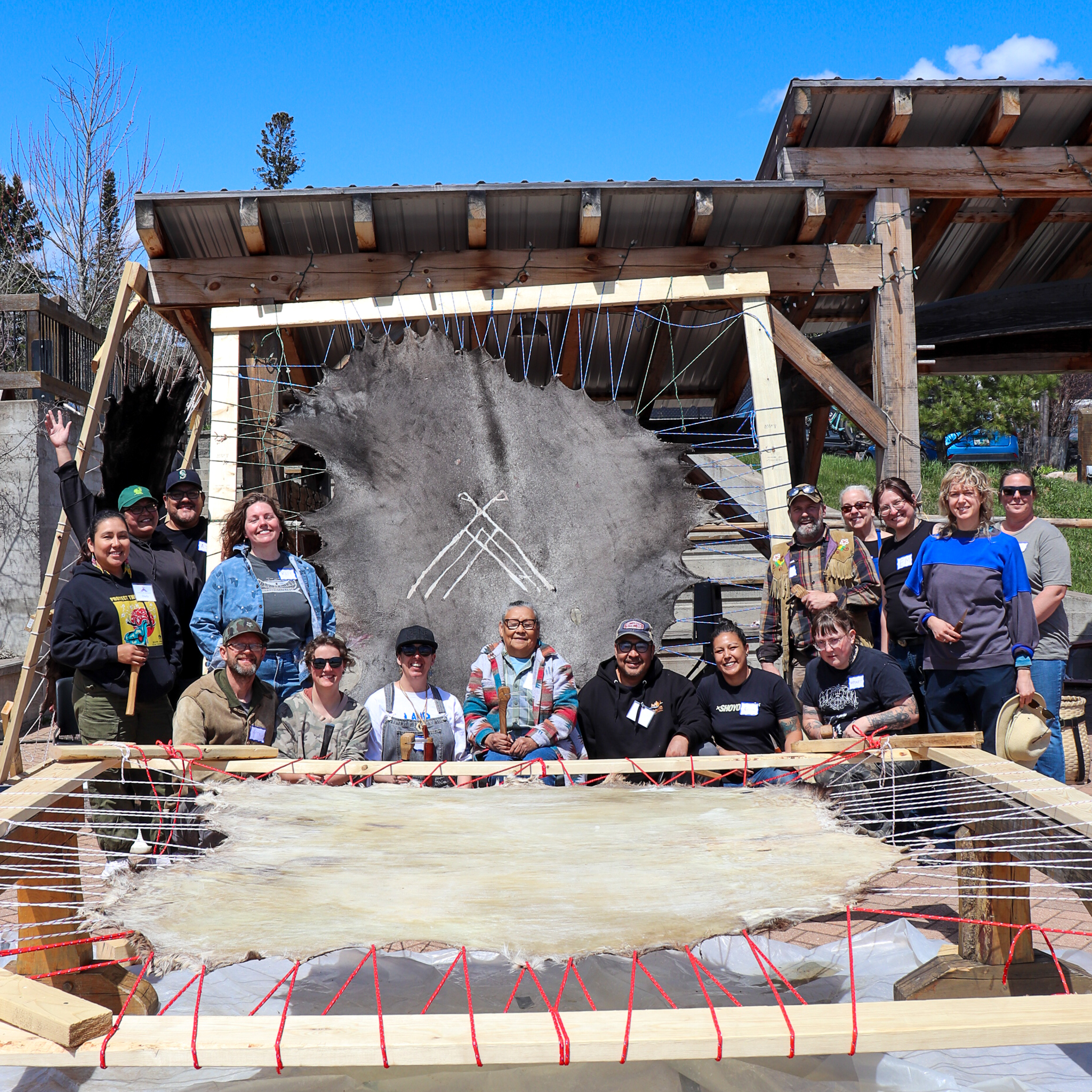
Every traditional craft practice raises the question: why bother? With hide tanning specifically, this question takes on a different depth. Program Director Jessa Frost writes about Hide Week, and the why of traditional tanning.
Each week, North House Folk School is transformed by the sights, sounds, and smells of the many traditional crafts taking place. One week, the steady pounding of black ash logs and the scent of freshly baked sourdough wafts through campus. The next, the classrooms hum with the noise of chain mortisers and the smell of white pine timbers. This past week, campus was filled with the distinctive sounds and smells of hide tanning as some of the finest natural tanners in the world gathered for Hide Week to learn, teach, and share about the ancient craft of turning animal skin into durable leather.
But along with the smoky scents and sounds of scraping, a question permeated each classroom: “Why bother with hide tanning?”
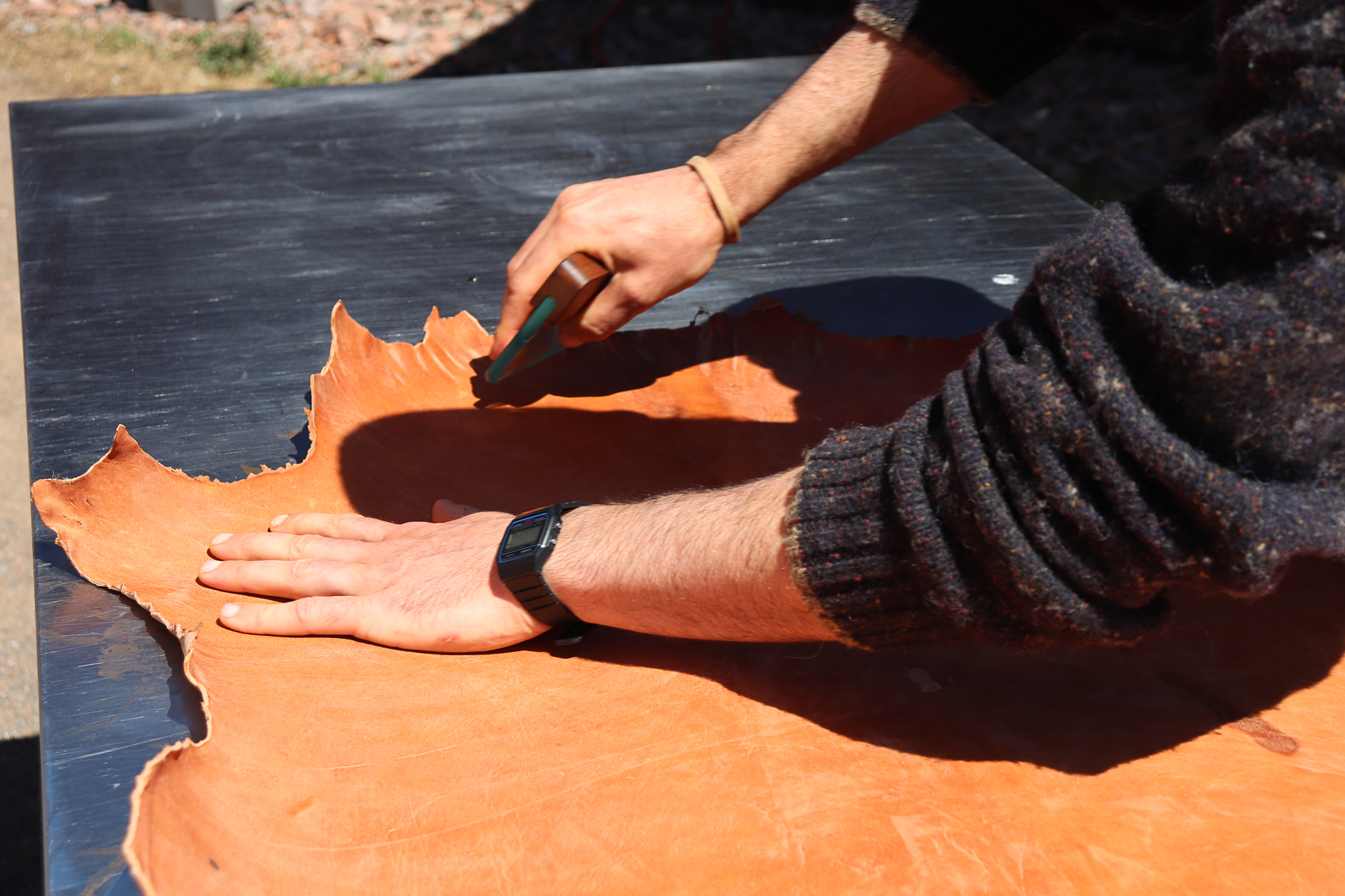
For the uninitiated, “Why bother?” is a pretty fair question to ask any North House student. Few of the things we make here are strictly necessary anymore; for any craft that can be made by hand, there’s usually a cheaper, faster way to produce it elsewhere. But as most folks who try their hand at craft realize, making things is about much more than just production. Craft is pleasurable, beautiful, and useful, and it has the ability to connect us to generational knowledge and the joy of being human. And with hide tanning specifically, the question of “Why bother?” takes on a different depth.
With a few exceptions, most of our fingertips graze over leather on a daily basis: shoes, belts, furniture, and wallets are common items in our lives. But today, our actual knowledge—let alone experience—of making leather is minimal. Turning the skin of a dead animal into a useful material is a complex, intricate, and physically demanding process. It’s a skill that humans have been at for 40,000+ years, but has long been removed from daily view and looked down upon in many cultures. Now, it’s one of the least-explored crafts, and perhaps understandably so: hide tanning takes a certain kind of grit, and an overcoming of the initial “ick” factor. But Hide Week showed that beyond this, tanning is filled with joy, connection, time-honored knowledge, and deep satisfaction.
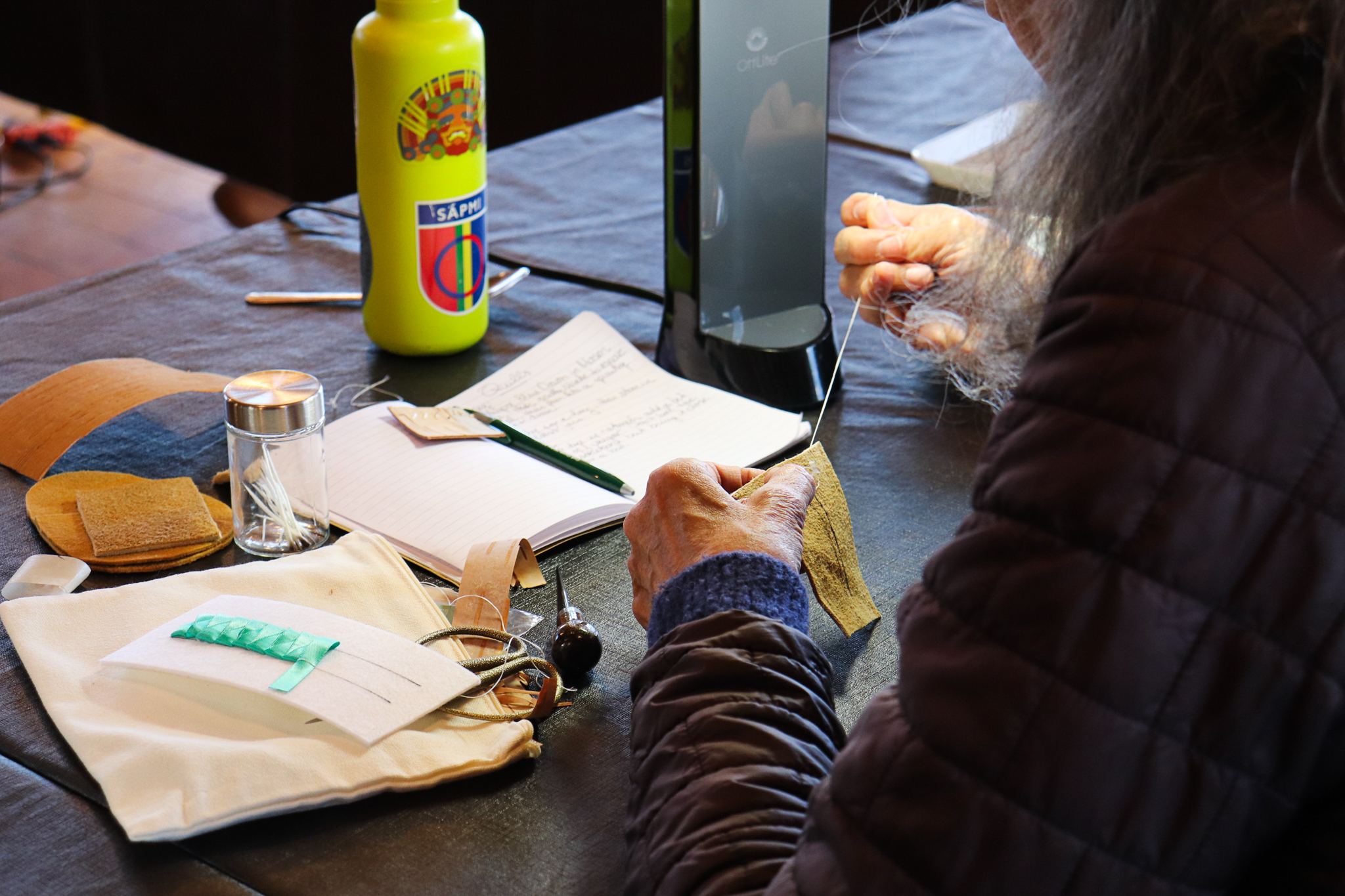
At this year’s Hide Week, North House hosted eight courses with many of our usual talented instructors in tanning and leatherwork. We also welcomed five special guest instructors from the US, Canada, and Sweden. Students from Alaska to Germany to many First Nations territories in Canada and sovereign Native nations in the US to neighbors from just down the road all gathered on campus for a full week spent exploring these traditional skills together. They fleshed, scraped, smoked, and sewed everything from moose hides to beaver tails, from fish skins to cow, deer, sheep, and goat skins. With so many curious learners and teachers present, classes were immersive, and conversations stretched over long fika breaks and late into the evenings.
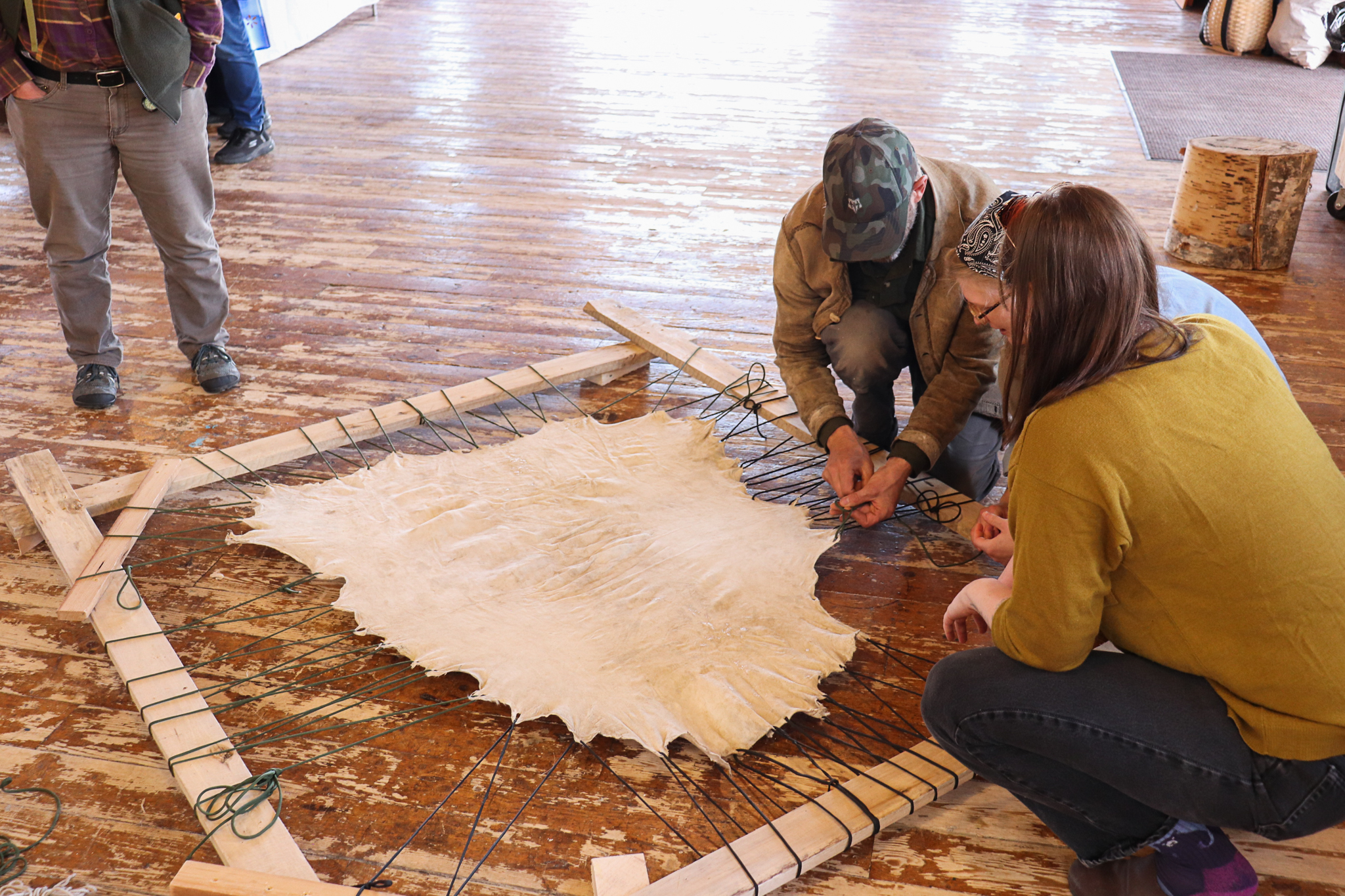
As the week progressed, the question of “Why hide tanning?” was asked and answered, and the answers were as varied as the folks who joined in.
For guest instructors Darla Campbell and Kevin Lewis, visiting from Ministikwan Lake Cree Nation with their mother, Mathilde Lewis, moose hide tanning is a deeply cultural practice rooted in the land, song, and story. It’s a part of generational healing needed to sustain their Cree culture and language.
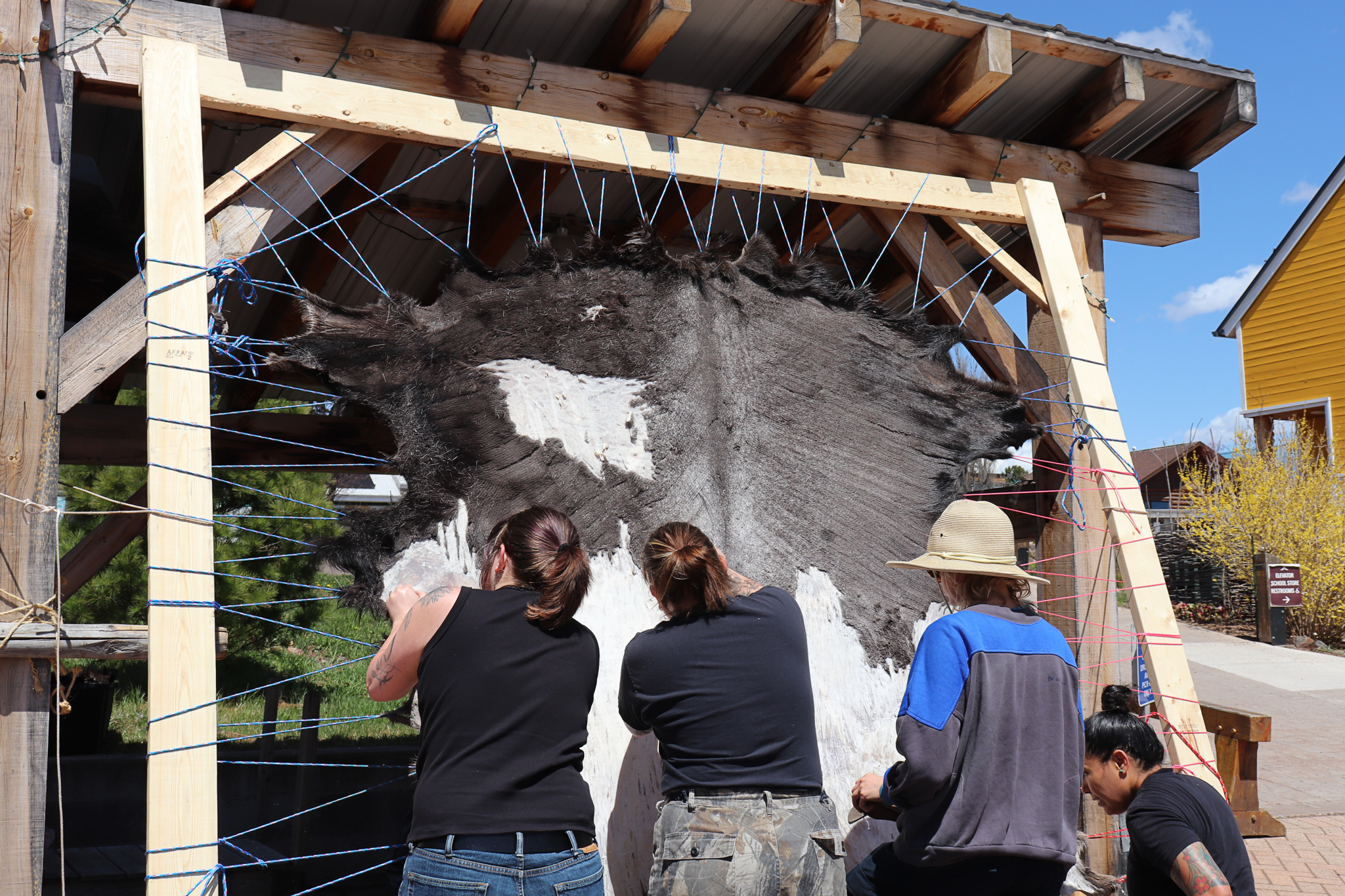
For Matt Richards, of Traditional Tanners, natural hide tanning is science and sustainability. It requires not just physical labor but our analytical brains to produce a durable material. Traditional tanning makes use of tons of otherwise-wasted animal byproducts from farming and hunting, and lacks the noxious impact of the industrial tanning process. Can all of our consumer demand for leather be met by traditional methods? No, but Matt points out that the scientific knowledge embedded in traditional methods holds promise to improve the industry and give people what they want: responsibly-produced goods made with care for animals and the planet.
For Swedish tanner Karl Karlsson, tanning is part of preserving and adding to our collective inheritance of human knowledge, ensuring that after thousands of years, ours is not the generation that loses these skills. His commitment to documentation and exploration of historical sources is part of keeping traditional tanning methods a vibrant practice.
Students also shared their own stories of why—to honor and utilize the animals, to understand the source of the things they use on a daily basis, to feel the joy of doing hard work alongside other people, and to simply experience the magic of the process. It’s an honor to host a gathering like this, and we look forward to the next Hide Week in the years to come.
A huge thank you to the many hands and hearts that made Hide Week successful: Emily Derke, Nate Johnson, Eric Edgin, Jean Marshall, Leanna Marshall, Erik Carlson, Shelby Gagnon, the Shakopee Mdewakanton Sioux Community, the Grand Portage Band of Lake Superior Chippewa, our many instructors, and of course, the North House staff and our community of supporters.