
Chairmaking, Ways of Working
Craft begins with the materials. In this blog post, Resident Artisan Lauren Newby writes about making chairs and stools, and the differences between working with dry lumber and working with green wood.
Upon my return from Sweden, I have been dreaming and scheming about a project I am just beginning again, while reflecting on pieces completed during the first half of the residency. Working with traditional, hands-on methods of processing wood requires attention to the grain and species specifications. Most of my chairmaking projects begin with the material itself. A seed of an idea comes from the way a log splits or huge slabs long before I make a drawing. Individual trees hold characteristics that capture my imagination. From its curves, grain, and scale, I gather clues about how a chair might function, the form it may take, and the personality it will hold.
The projects I am sharing here reflect two approaches: working with dried lumber from a sawyer and working with a freshly felled tree, still full of life and moisture.
The Cherry Pair
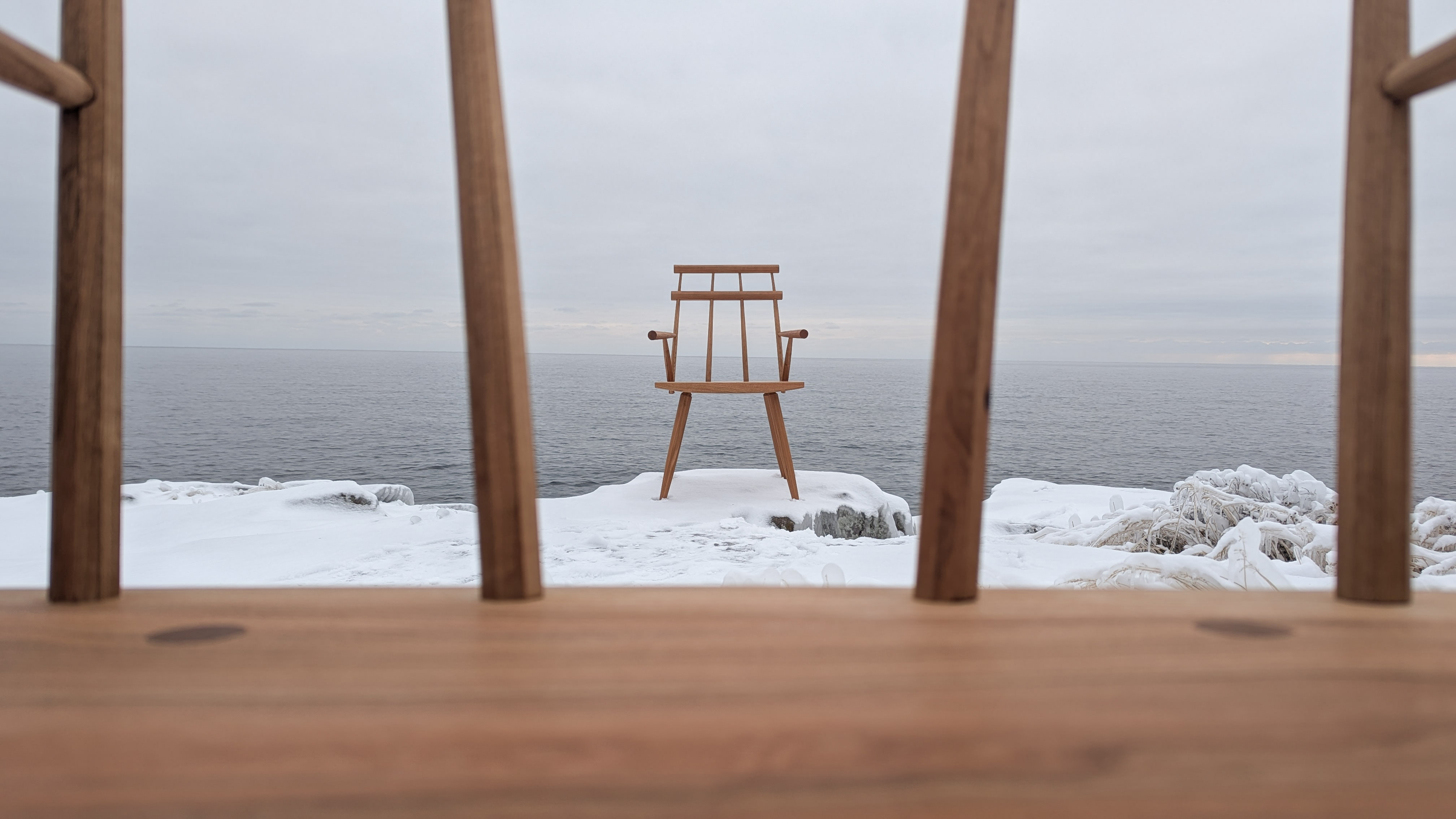
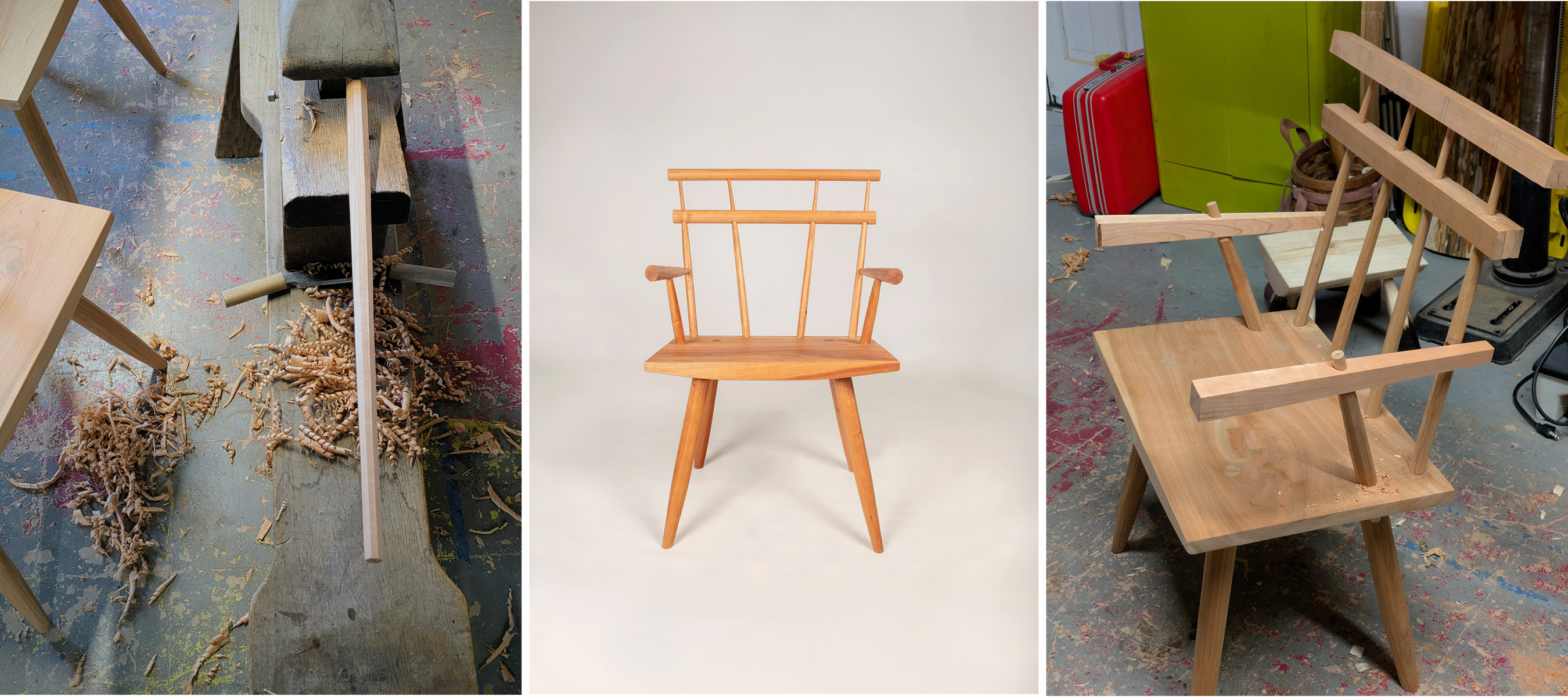
This set of chairs began with a gift: a large slab of cherry from a non-woodworking friend who found it after moving into an old Milwaukee brick factory-turned-artist studios. The slab was sawed from a large cherry tree, wide enough to accommodate a chair seat and long enough to make a pair of chairs.
The growth rights are wide and expressive, perhaps shaped by wind or hillside exposure. Cathedral grain sweeps dramatically across the surface. Small cracks and sap pockets revealed themselves along the way, requiring inlaid patches. These repairs now read like tessellations and are visible moments of care embedded in the wood.
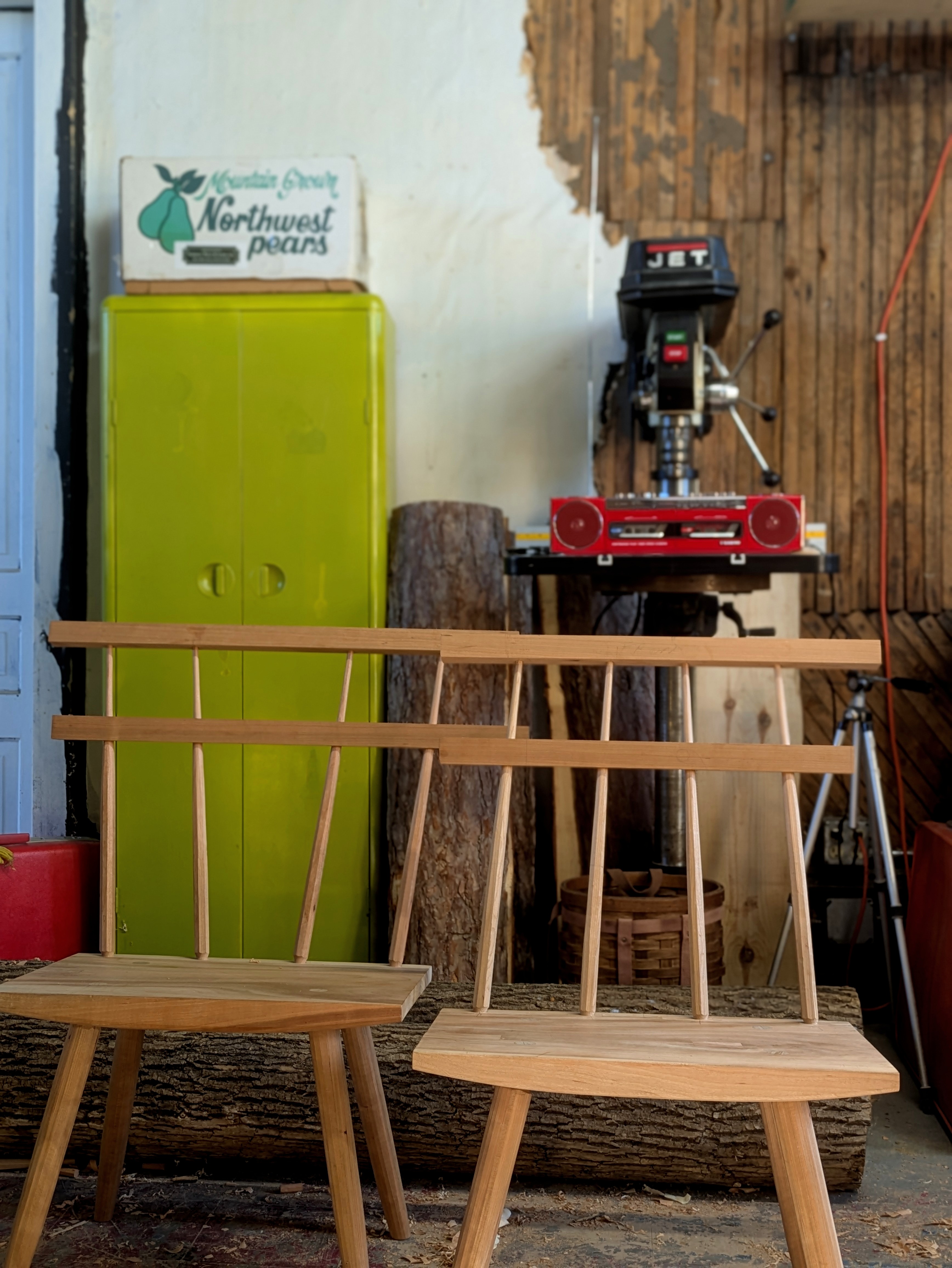
I wanted to work from a stick chair lineage, referencing Lost Art Press’s The Stick Chair Book and photos from Mary Tripoli’s visit to the Welsh Stick Chair exhibition. Their resurgence in the United States often utilizes easy-to-find lumber from the sawyer. The vernacular tradition often uses natural bends or straight-grained pieces joined with round mortise-and-tenon in inventive ways. The result is sturdy, timeless, and comfortable with a handmade charm that resists ornamentation.
Designed for resting, these chairs have a generous lean and armrests ready to hold a book or warm drink. Because they exist as a pair, I wanted subtle variation between them. After drawing and building models, I landed on backrests that splay either inward or outward. The gesture suggests either invitation or containment. In a home, which might you choose: the open posture that welcomes you, or the narrower curve that lets you feel held?
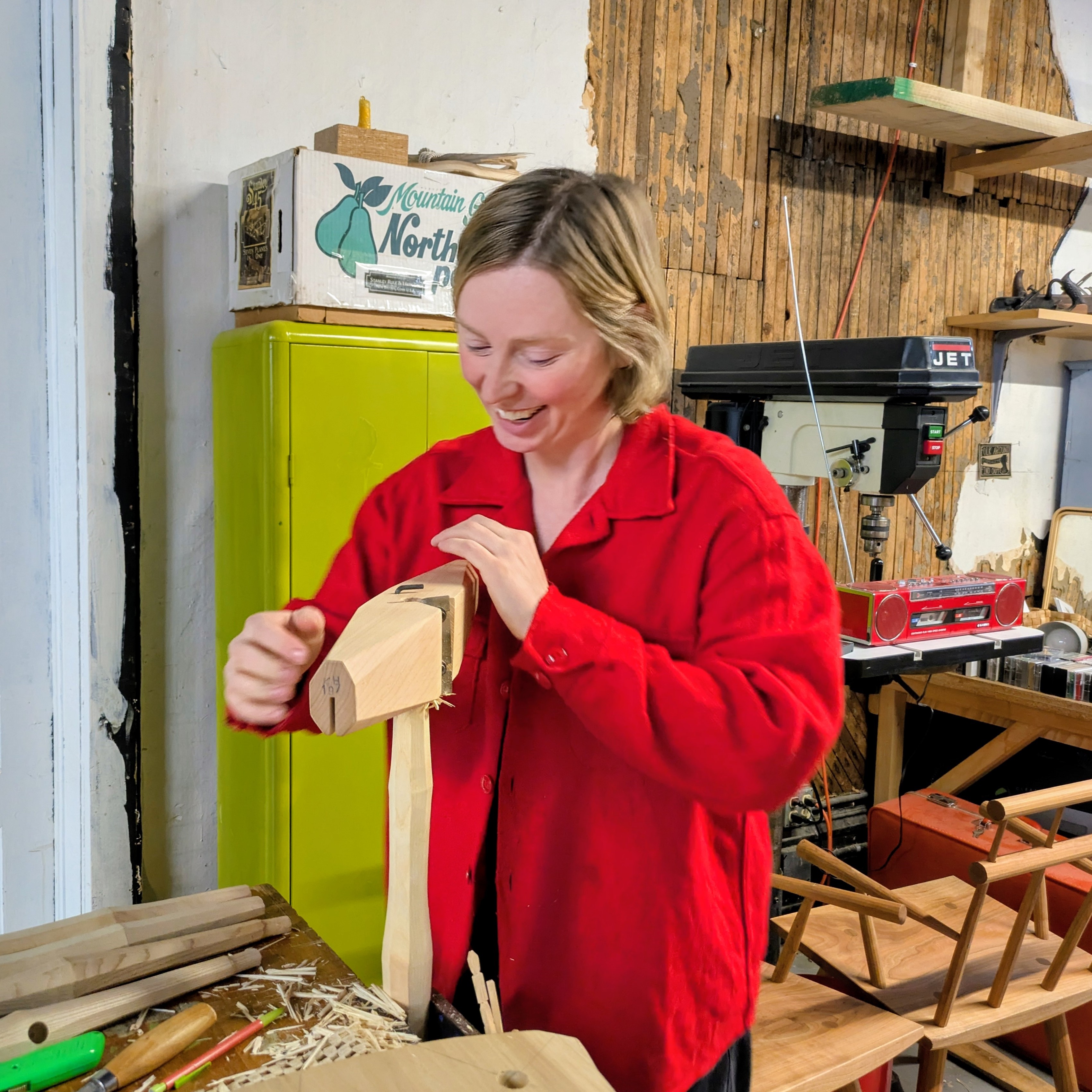
I don’t often work with dry wood for chairmaking. Its precise nature pushes me to focus on surface, silhouette, and texture. After sawing square spindles and legs from boards, I removed the corners on the shavehorse with a drawknife to create octagons and tapers. From there, I shaved the corners again, revealing faceted spindles, arms, crests, and posts. Working these pieces by hand leaves a texture I’m after, with a nod to the old Welsh stick chairs while still feeling present and intentional.
Ash Stool
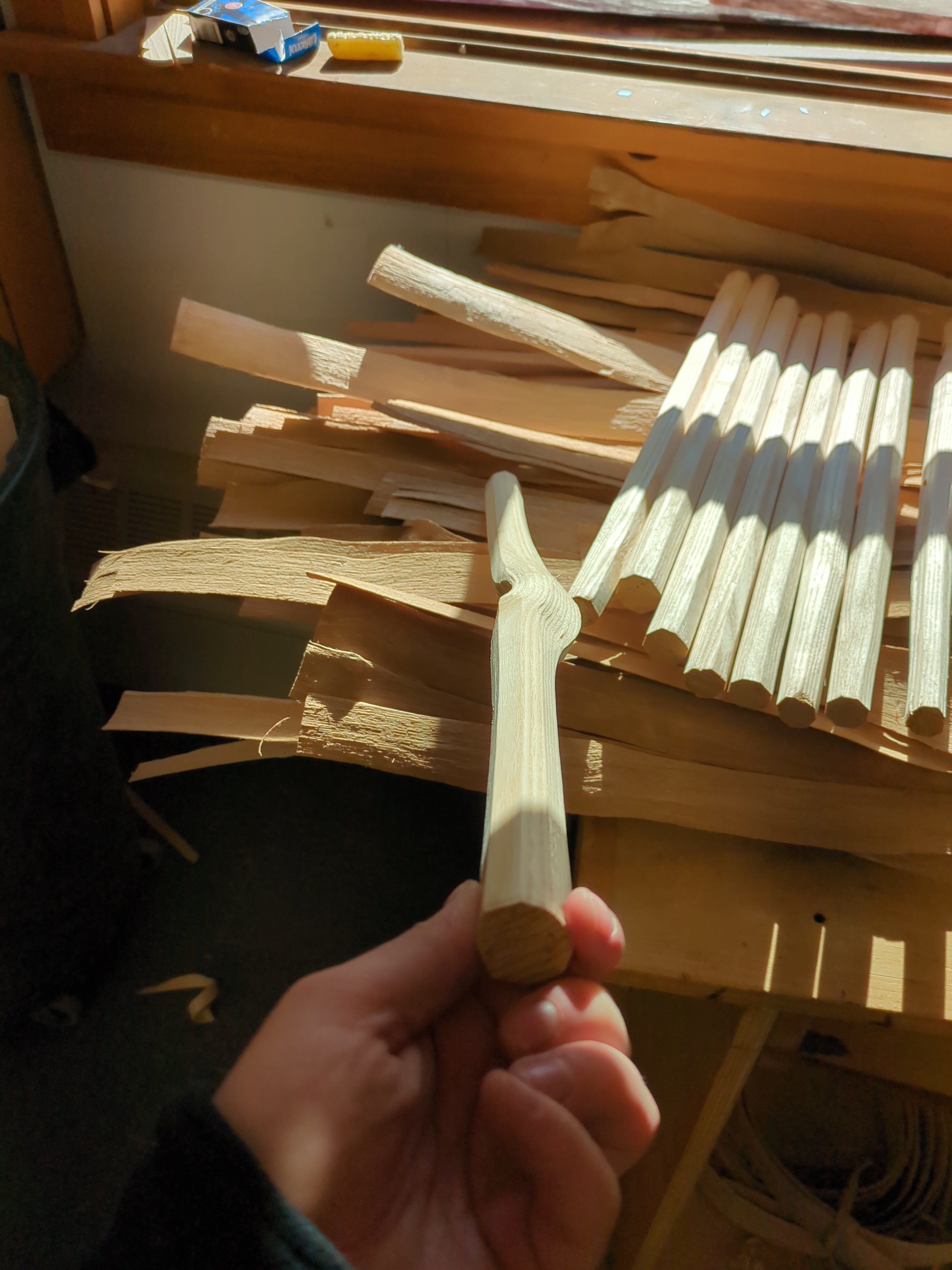
Meanwhile, I had the chance to cut down an ash tree with an uncle on family land for chairmaking material. Splitting a six-foot log into useful dimensions is both exciting and daunting. It requires a balance of control, through technique, attention, and a willingness to work with the tree as it reveals hidden knots and subtle twists. From a single tree, I can produce a stock of legs and spindles and teach eight new chair makers through building stools.
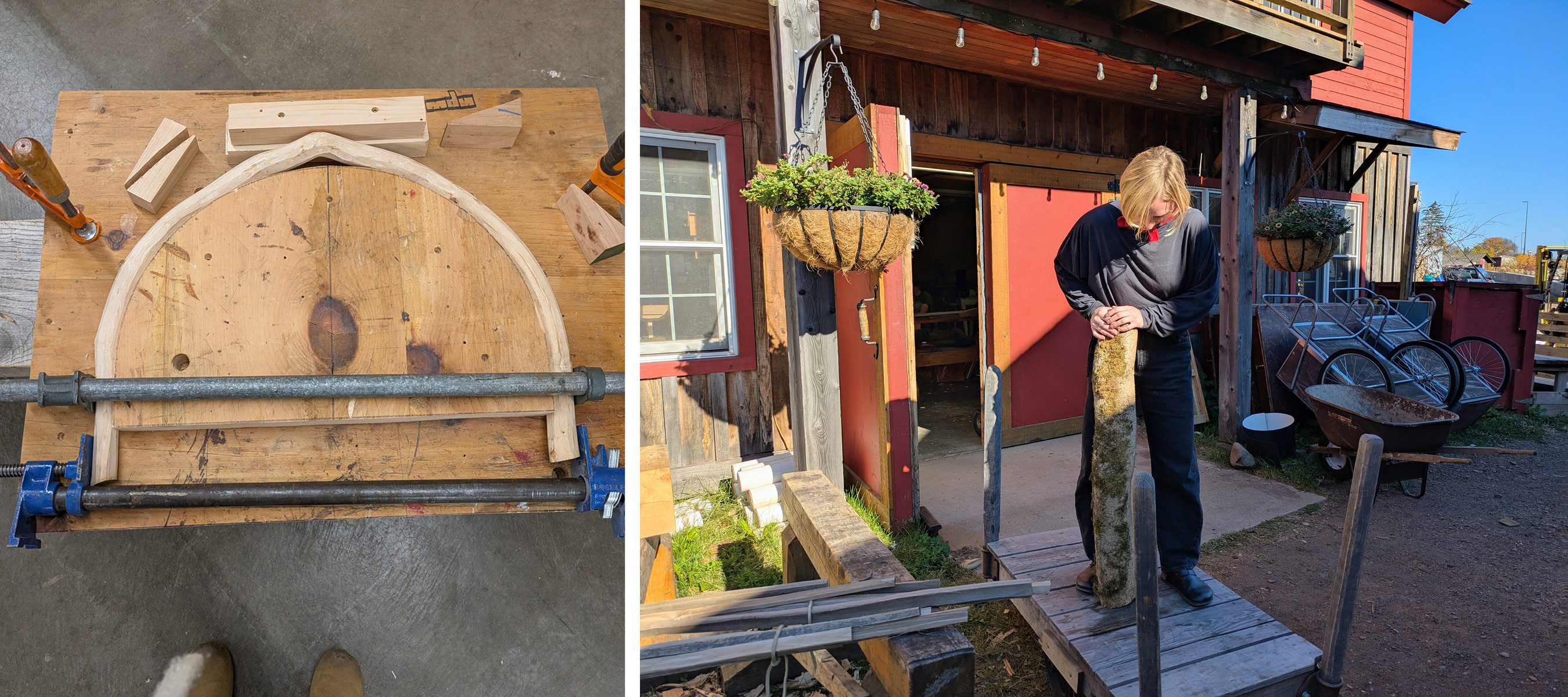
One chair in particular became an experiment in preserving the natural curves and irregularities of the wood. Using a shorter section near the top of the trunk, where stress and branching had shaped the fibers, the split pieces arced beautifully. I established centerlines to reference square, then used mirrors and careful sighting to drill for stretchers, forming a post and rung stool. Green wood invites responsiveness. It can feel like a loss to shave away every trace of a tree’s life in pursuit of uniform parts. With this stool, the curves remain. It feels alive and still carries the memory of the tree it came from.
Working between dry lumber and green wood reminds me that design is both intention and listening. One asks for precision and surface articulation; the other responds and trusts. Both begin with the same curiosity in paying attention to the material of a tree.
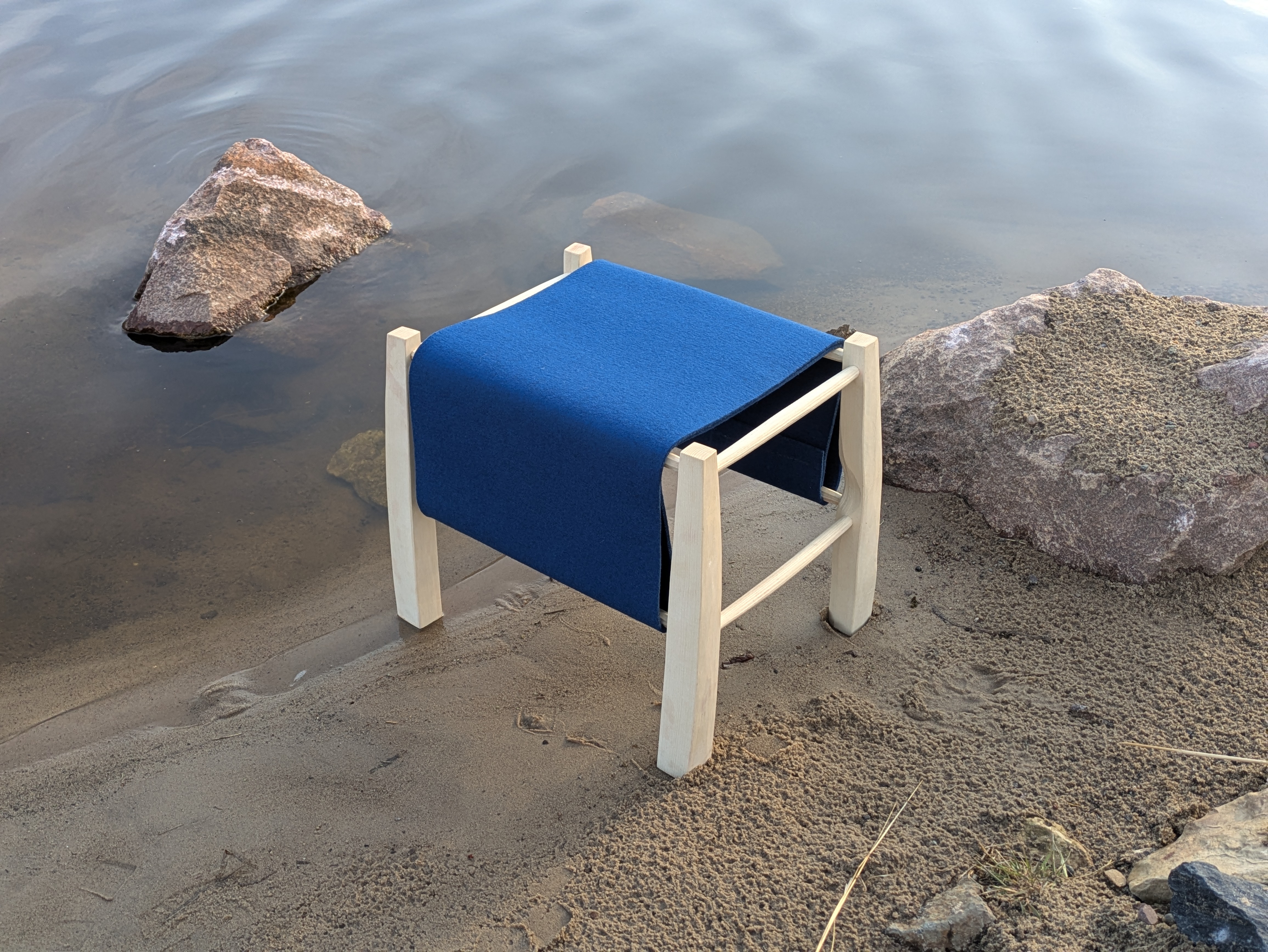
Back in the studio, I’m revisiting material gathered with the help of former intern Mia. During her capstone project, she harvested a black ash tree from a friend’s forest. Parts of the tree became baskets, chairs, and board games. With black ash thriving in wet ground, this tree had large exposed roots. I was able to harvest sections and have been experimenting with bending some and splitting others. I am left working these pieces into future chairs.