
Armchairs and Ultramarine Blue
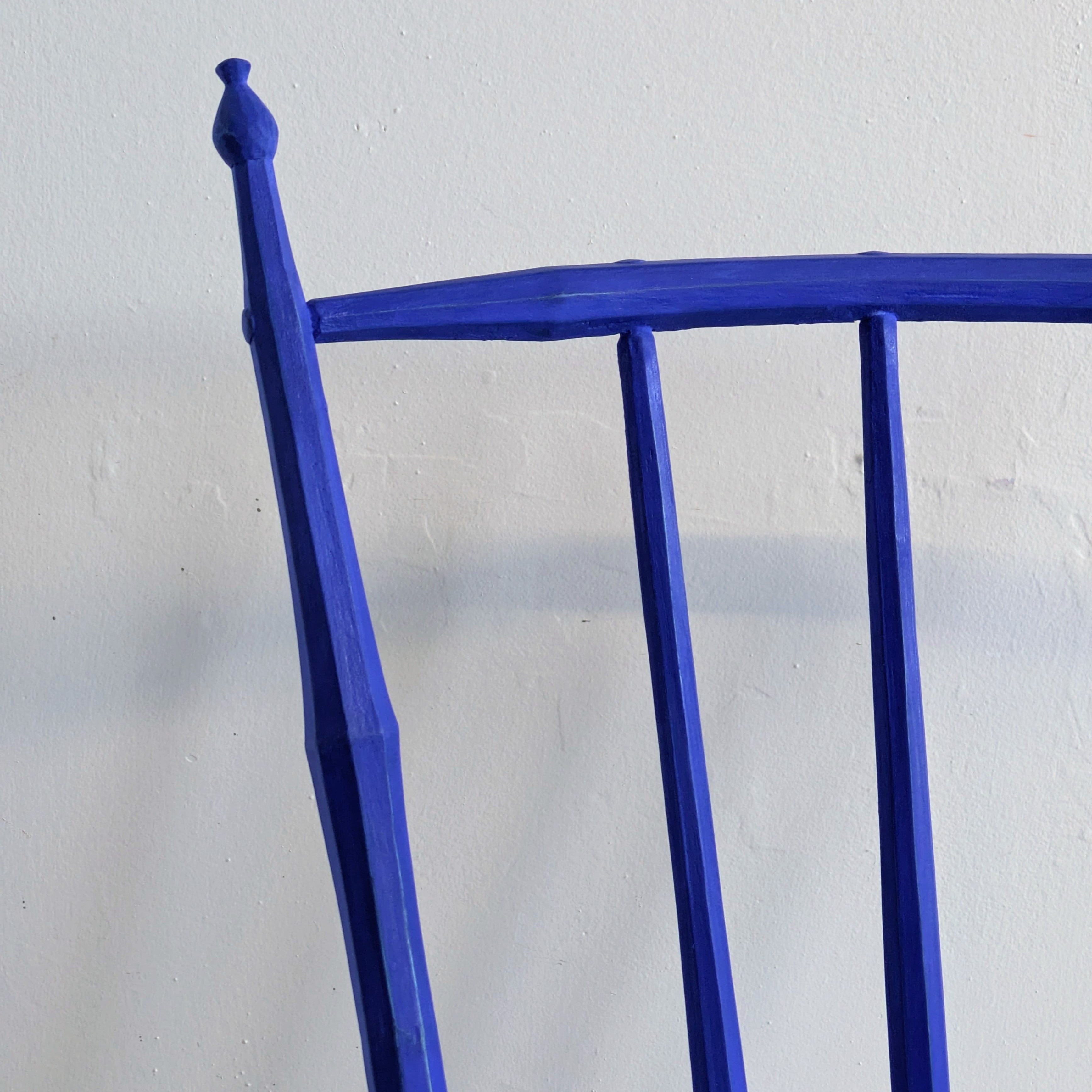
Inspired by the electric blues of Sweden, Lauren Newby set out to mix the perfect ultramarine for her Windsor armchair, using a combination of milk paint and raw earth pigments.
In chairmaking, stick chairs, or Windsor-style chairs, are often painted because they are a mix of wood species. Ring porous woods, like white ash and oak, are split out for thin and flexible spindles. The seat is often a softer and lightweight wood for carving, like white pine or poplar. Chairmakers often employ color theory to adjust for the warmth and depth of color. For example, it is most common to put a layer of red under black to create a warm and deep black.
After I finished a set of armchairs earlier this month, I was looking forward to mixing paint for a very particular shade of blue. I was enamored with the colorful interiors I encountered in Sweden, from the Karin and Carl Larsson home to Sätergläntan’s campus. This electric blue was seen on doors, light fixtures, and furniture. Back in the studio, I was trying in earnest to use a variety of milk paint colors to reach the desired tone.
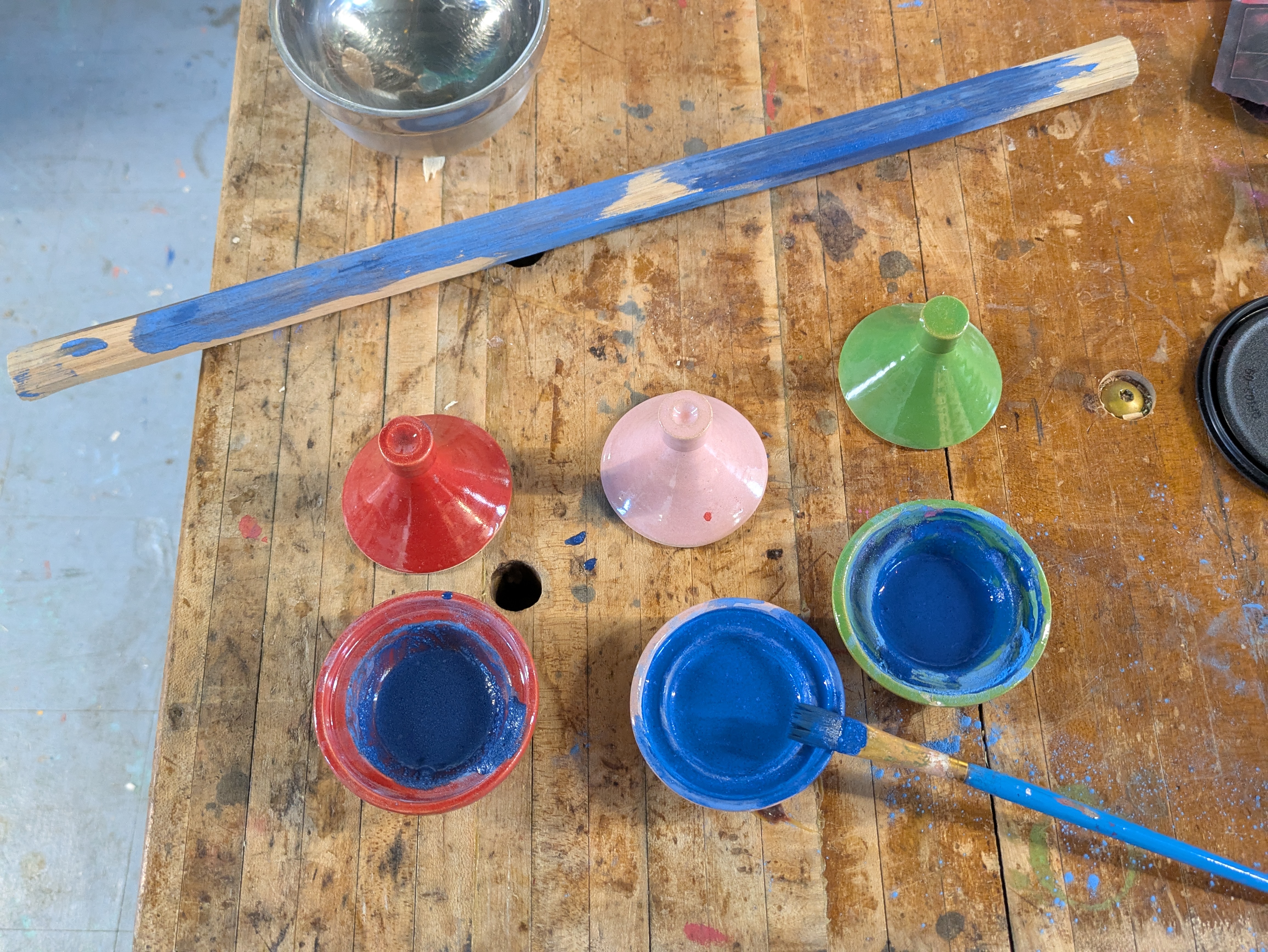
Sticking with milk paint for its familiarity, I spent time using color theory to mix up a warm, red-toned, vivid blue, without much success. With many craftspeople and woodworkers in Grand Marais, I connected with my friend Cooper Ternes over the blue I was searching for. He was also on a search for a particular green. And so a playdate for milk paint and color theory was set.
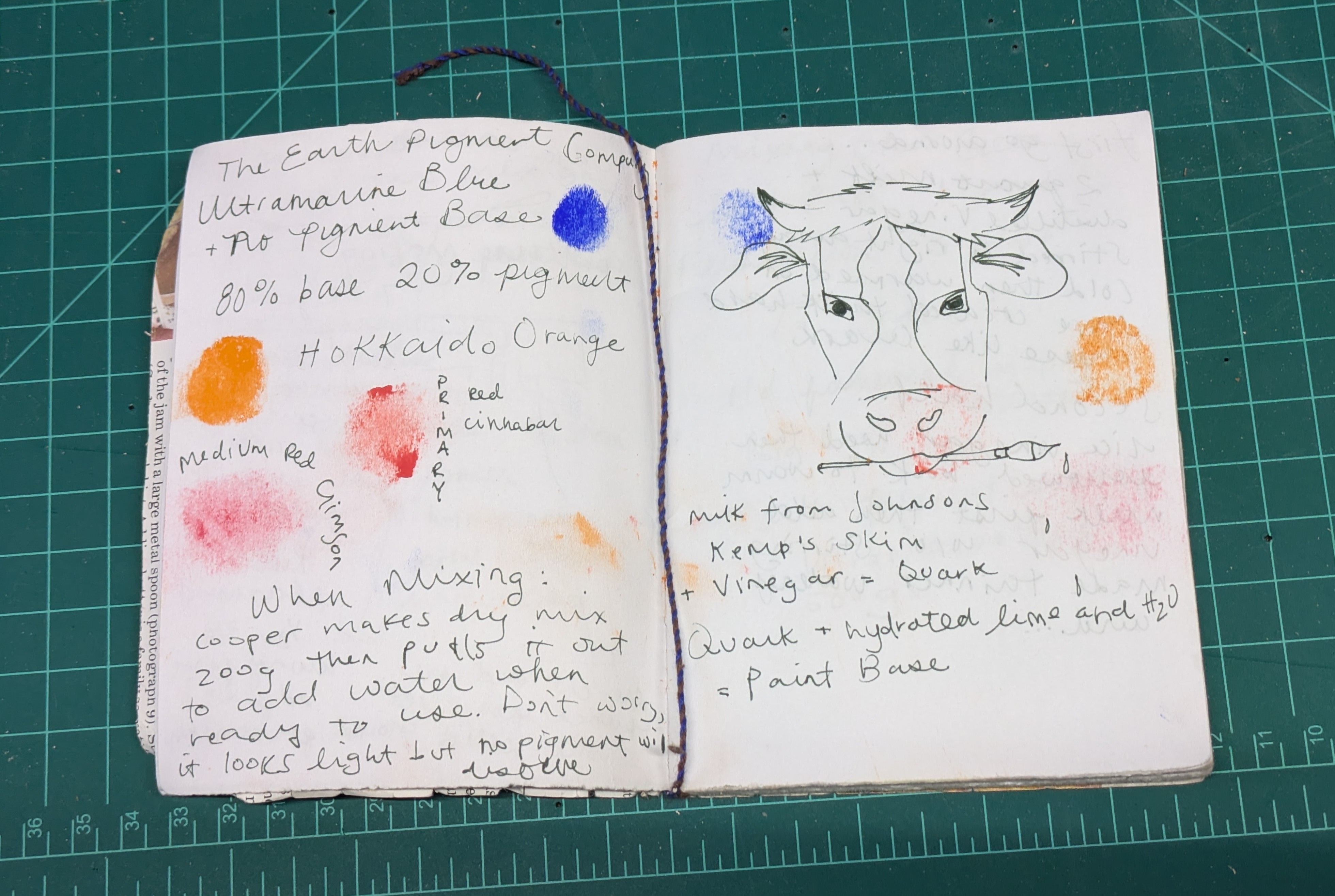
At Cooper’s, not only did we bring our collection of paints and pigments, but we made milk paint from scratch with Johnson’s skim milk and guidance from Make Fresh Milk Paint by Nick Kroll. Cooper, in his second year of the Artisan Development Program, was similarly inspired by the vibrant colors seen in Swedish homes, public spaces, and museums. We mixed vibrant greens and played with earth pigments to get the desired colors: Cooper for bowls and I for chairs and stools. Unable to mix milk paint shades for the vibrant colors, Cooper taught me how to mix raw earth pigments with unpigmented milk paint. The beloved familiarity and texture of milk paint will continue with a whole new world of color possibilities opening by using earth pigments.
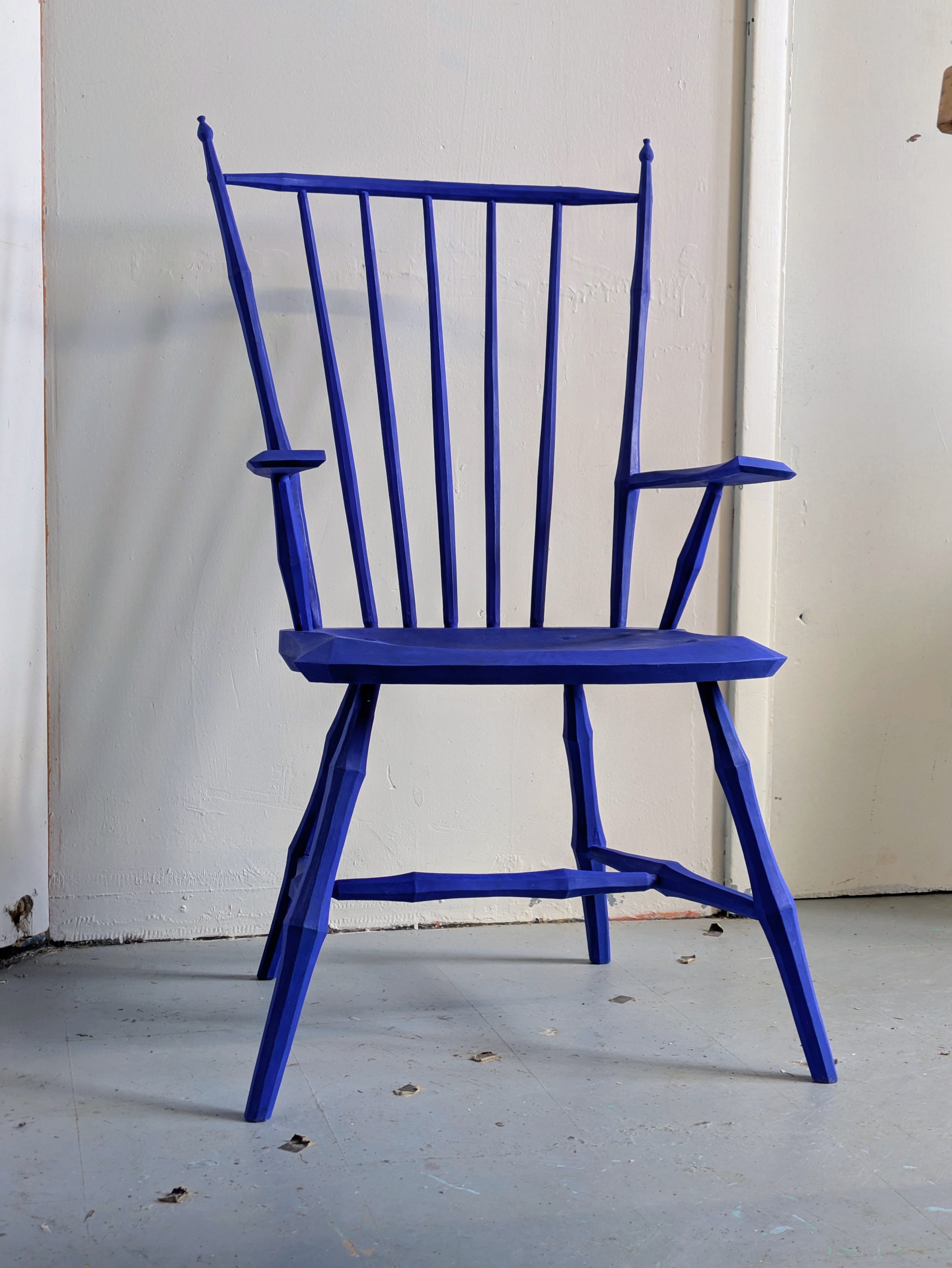
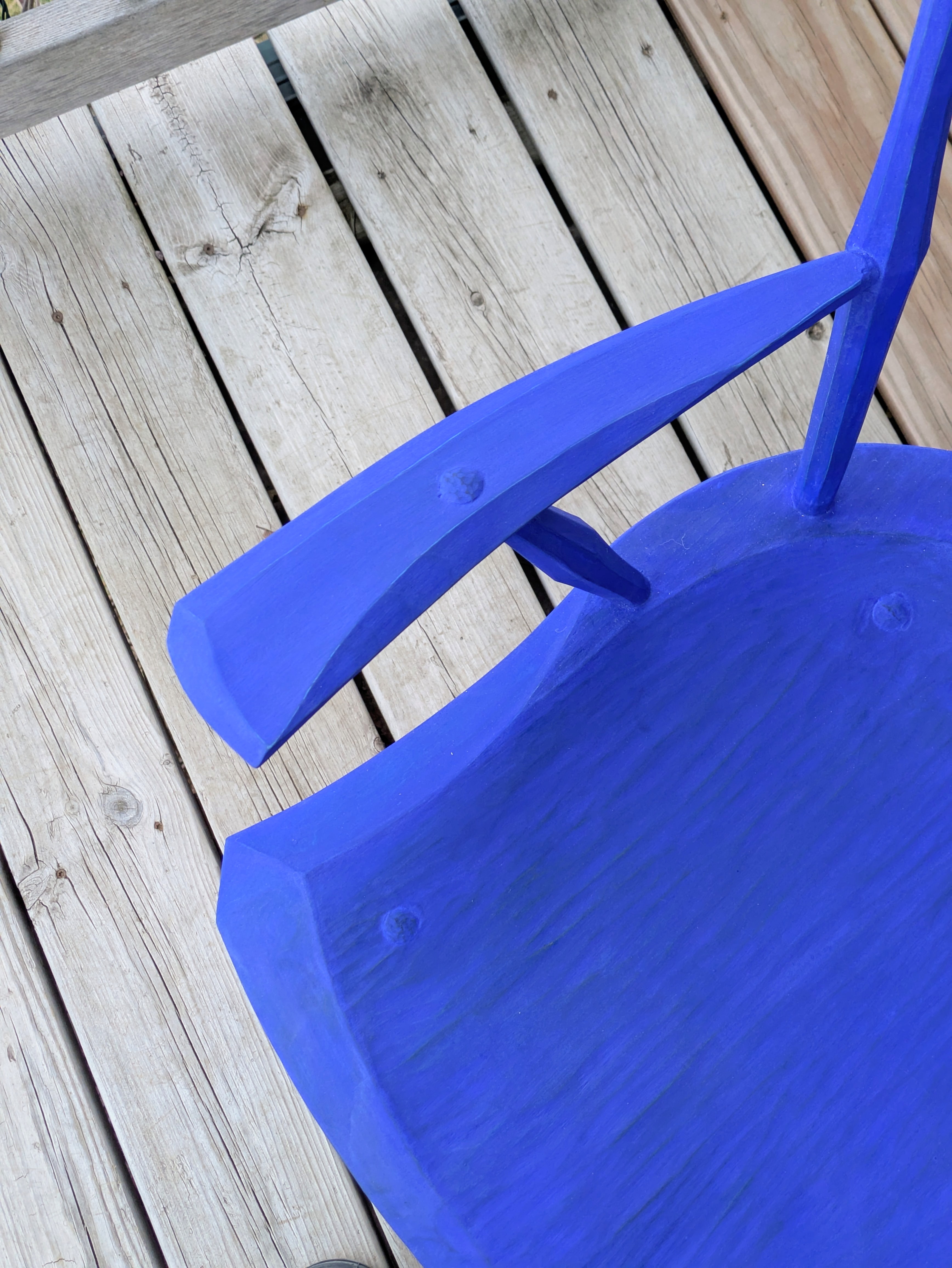
Drenched in ultramarine blue and carved poppy finials, the armchairs are complete. I am often after specific colors and hues, and look forward to employing earth pigments to achieve them. Often, the pigments are minerals, and in labs, their molecules can be built with the same particle structures to create “synthetic” pigments. I unearthed a textbook from college we would reference in a color theory class called Artists’ Pigments, a Handbook of their History and Characteristics by Ashok Roy. On ultramarine blue, the name may come from 13th-century Italian painters who treasured the blue “from across the seas.” The pigment was ground from Lapis Lazuli, a rock found in modern-day Afghanistan. In the 14th and 15th centuries, it was as expensive as gold. Renaissance painters used it in reverence for the robes of the Madonna, with less expensive blues and greens built up underneath. It remained expensive until a synthetic was invented in the 19th century, made up of sodium aluminum sulfosilicate.
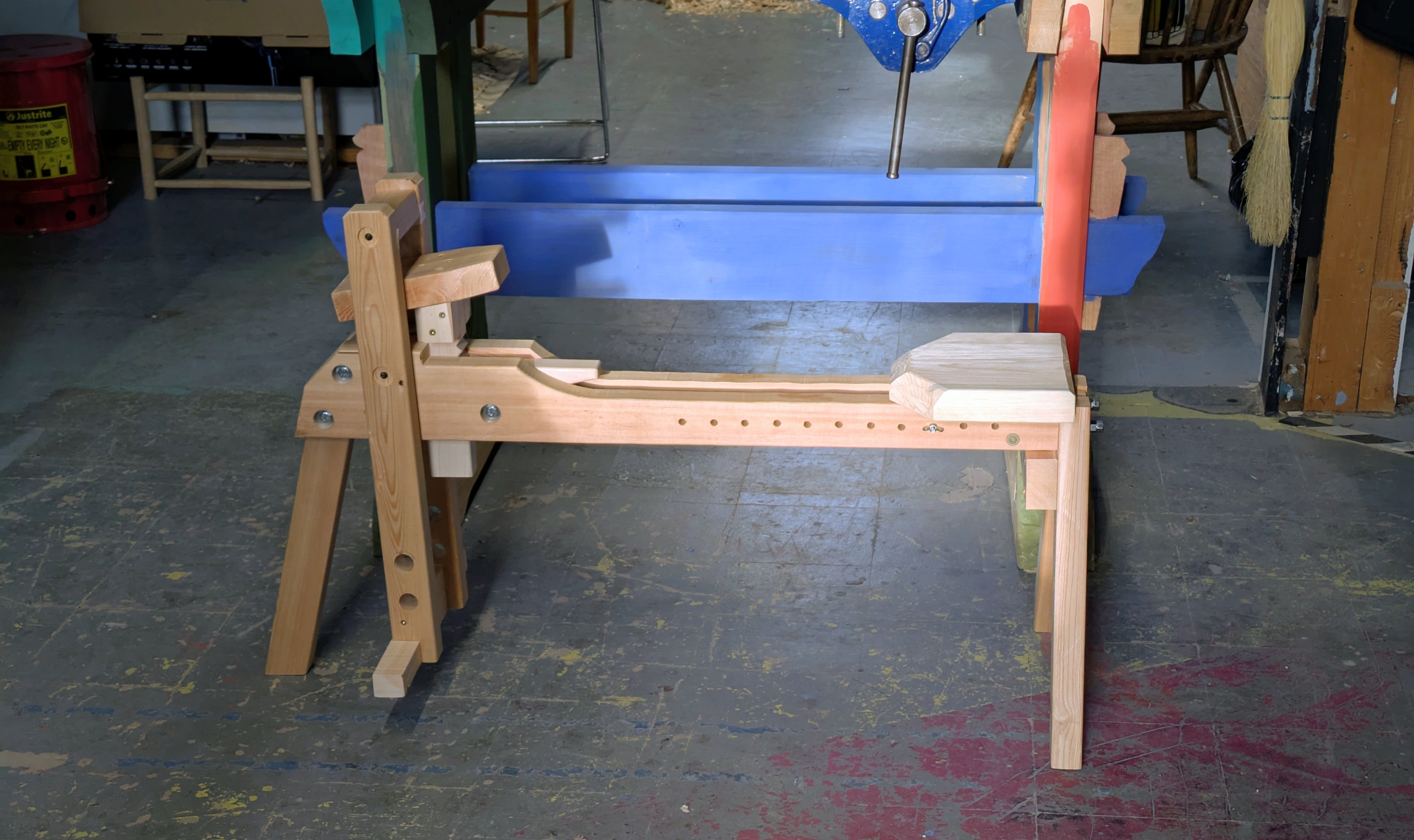
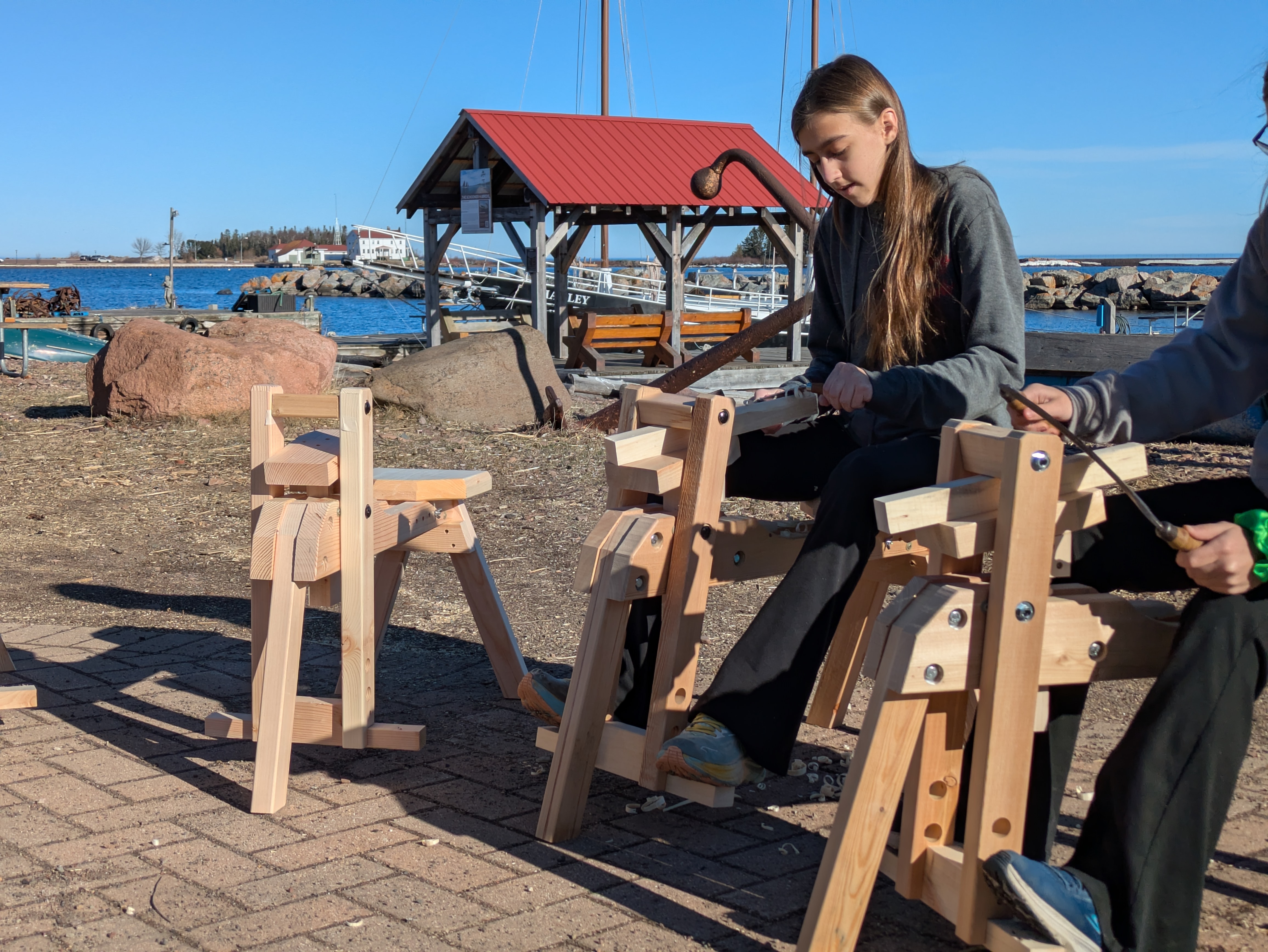
While waiting for the paint to dry, I have been building kid-sized shave horses for youth programming at North House. I have had the joy of teaching kids how to build with wood over the past few summers, putting hand planes, augers, and drawknives in their hands. I am looking forward to sharing with them the opportunity to use your whole body on a shave horse with a draw knife to carve wood away. To do this, I connected with Jeff Lefkowitz, a chair maker and engineer who has published chair and shave horse plans. We adapted the plans to fit small humans, with four little horses now living at North House for kids. They are sturdy and hold wood so securely, with a few adjustable pieces, heights, and lengths to fit a variety of ages.