
Fiber Art
Spinning the North Shore
Course Overview
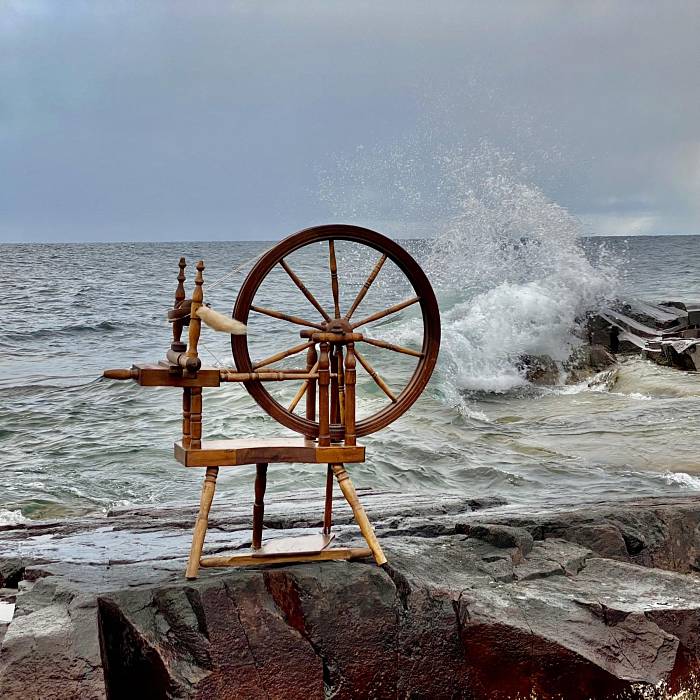
For thousands of years, handspinners throughout the world have spun yarn in ways shaped by their local environment. From fiber to spindle to dyepot, handspinners have worked with available materials to create yarn suited to where they live. While handspinners today have more options available to them, there is something magical about working with local materials, especially in a place as special as the North Shore of Lake Superior. Join us for an all-levels handspinning and natural dye class on the Grand Marais harbor. During class, we will explore handspinning fundamentals on drop spindles and wheels using local wool. We will take a short hike to forage for natural dyestuffs. We will use materials from the Iron Range of Minnesota as color modifiers and dye outdoors with fresh water from Lake Superior. Students will leave class with unique handspun yarn that embodies the magic of the North Shore, and the knowledge to create yarn that tells stories of other special places.
While handspinning typically requires simultaneous use of both hands and feet, students may opt to use a drop spindle exclusively during class.
During our short hike to forage for natural dye materials, the route will include some walking over uneven terrain, although the walk will not be overly strenuous.
Spinning wheels will be available to borrow during class (please email info@northhouse.org if you need one), but if you have one at home, you’re welcome to bring it.
Students ages 14+ may register for this course. Youth ages 12+ may register with an adult. Adult/child pairs will complete two projects and pay two materials fees. A 25% tuition discount applies to the youth registrant when registering with a full-paying adult; call to register.
Required Tools
- Students should dress for the weather forecast. Weather permitting, we will spend time spinning, foraging, and dyeing outdoors.
Optional Tools
- Spinning wheel, spindle, or e-spinner you use at home
- Spinning footwear of your choice: slippers, socks, or shoes with a soft sole are most common. Hard-soled shoes and sandals tend to be more difficult to spin in.
- Basket, bucket, or bowl to contain your fiber as you work
- Stool or chair you prefer to use while spinning
- Lap cloth
- Non-skid pad
- Notebook and writing tool of your choice
- Hiking shoes
- Sun protection: sunglasses, sunblock, sun hat.
Dates
Course Details
Latest Update:
View recent changes →Meet the Instructor
Request a Catalog